Glass bead blasting is a controlled abrasive blasting process used to clean, deburr, hone, peen and finish surfaces. Unlike angular abrasives that cut more aggressively into a workpiece, spherical glass beads provide a controlled impact that can produce a consistent satin, matte or peened finish while providing less aggressive material removal than angular abrasives.
Kramer Industries provides glass bead blasting media in multiple grades and particle sizes for industrial cleaning, finishing, honing, peening and light deburring applications. Selecting the right bead size and controlling blasting conditions are important for achieving the required surface appearance and performance.
The Science Behind Glass Bead Blasting
Glass bead blasting uses compressed air and blasting equipment to propel spherical glass beads against a workpiece. The beads impact the surface to remove light contamination, oxidation and imperfections while providing peening, honing, light deburring and finishing.
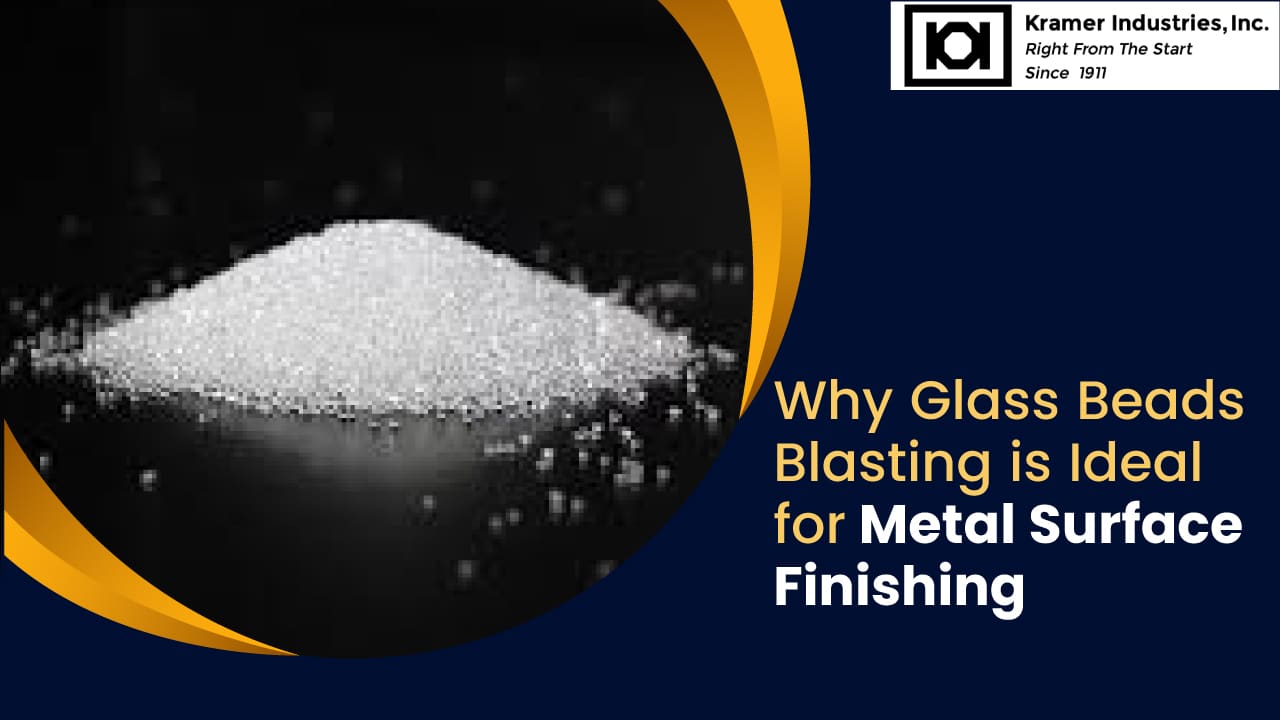
Kramer’s glass beads are spherical, clear soda-lime glass with 0% free silica content according to its current specification sheet. The media are available in multiple grades and particle sizes for different blasting requirements.
Unlike angular abrasives that rely on sharp cutting edges, spherical glass beads primarily provide a controlled peening and finishing action. The final result depends on the substrate, bead grade, air pressure, blast angle, working distance and exposure time.
Glass Bead Blasting vs. Sandblasting
Glass bead blasting and sandblasting are used for surface cleaning and preparation, but they produce different results.
Glass beads are spherical and generally provide a less aggressive finishing action. They are commonly selected for cleaning, peening, honing, light deburring and creating uniform surface finishes.
Angular abrasives such as aluminum oxide provide stronger cutting action and are better suited to aggressive coating removal, etching and surface profiling. Kramer notes that glass beads can be selected when removing scale while maintaining a shiny satin finish is the objective.
The choice depends on the required result: glass beads are generally better suited to controlled finishing, while more aggressive abrasives are preferred when substantial material removal or profiling is required.
The Subtle Strength of Glass Beads
Glass bead blasting can provide controlled cleaning and finishing while helping maintain the existing geometry of suitable parts.
Common applications include:
- Removing light oxidation and rust
- Cleaning oil, grime and surface contamination
- Removing light machining burrs
- Blending machining and tool marks
- Honing and peening surfaces
- Removing suitable light coatings
- Producing satin or matte finishes
- Preparing suitable surfaces for painting, plating or other finishing processes
Glass beads are particularly useful when surface appearance and controlled material removal are important. They can be used on suitable metal, plastic, composite and other substrates when the media and blasting conditions are properly selected.
When to Use Glass Beads Blasting
Glass bead blasting is a strong option when controlled cleaning or finishing is more important than aggressive cutting.
Typical applications include deburring intricate parts, cleaning stainless steel and aluminum components, removing oxidation, blending machining marks, producing satin or matte finishes, peening, honing and preparing suitable surfaces for subsequent finishing processes.
Glass bead blasting is used in industries including aerospace, medical device manufacturing, automotive, electronics and general manufacturing. Applications can include precision components, engine parts, connectors and other parts where controlled surface treatment is required.
Media Size: A Small Detail with a Big Impact
Glass beads come in quite a wide range of sizes, typically from 40 microns up to around 850 microns. Smaller beads create a more refined finish that is smooth, satin or matte. The use of larger beads results in a coarser, more textured surface. This type of surface can help mask imperfections and give coatings something extra to grip.
Choosing the right bead size is the first step to doing the job correctly. For example:
- Fine media (e.g., 60–100 mesh): Use fine media when dealing with delicate surfaces and aiming for subtle finishing or final polishing.
- Coarse media (e.g., 20–30 mesh): Use coarse media when heavy-duty cleaning and aggressive peening are needed. This will also create a textured surface.
Matching media size to the application ensures optimal results. It helps achieve the desired texture without overworking or undercleaning the surface.
Surface Integrity
Surface finishing is not only about appearance. The condition of the finished surface can affect friction, fatigue performance, coating adhesion and the long-term performance of a component. In applications where cleanliness and surface condition are critical, such as food processing and pharmaceutical manufacturing, appropriate surface-finishing practices can also support required cleanliness and processing requirements.
Glass bead peening may provide several surface benefits, including:
- Reduced risk of stress corrosion cracking
- Improved fatigue resistance due to the uniform compressive stress produced by peening
- Enhanced bonding for paints, sealants and other coatings
The peening action of spherical glass beads can create a controlled compressive effect at the surface. Glass bead blasting can also produce a uniform surface profile for subsequent finishing operations.
These results depend on the substrate, media grade and process conditions, so blasting parameters should be selected for the specific application.
Industry Applications
Glass bead blasting is used across a wide range of industrial applications.
Aerospace: Suitable components can be cleaned, finished or peened where controlled surface treatment is required.
Medical: Applications can include suitable surgical instruments, orthopedic components and dental equipment where controlled finishing is important.
Automotive: Glass beads can be used for engine components, restoration work and suitable parts requiring oxidation, contamination or machining-mark removal.
Electronics: Suitable connectors and components can be treated for light cleaning or oxidation removal where aggressive cutting is undesirable.
Abrasive blasting can be used on a wide range of substrates when the appropriate media and process conditions are selected. Sensitive and specialized materials require careful evaluation of substrate compatibility to achieve the desired result without damaging the surface.
Glass Beads vs. Aluminum Oxide
Glass beads and aluminum oxide are selected for different blasting objectives.
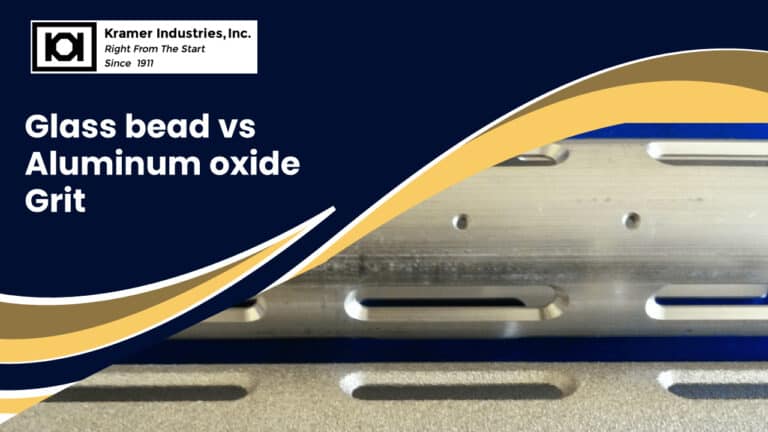
Glass beads are spherical and generally preferred for controlled cleaning, peening, honing, light deburring and surface finishing. They can produce satin, matte or peened finishes with a less aggressive cutting action.
Aluminum oxide is a hard, angular abrasive with stronger cutting action. It is generally better suited to aggressive cleaning, coating removal, etching and surface profiling.
|
Glass Beads |
Aluminum Oxide |
|
Spherical media |
Angular media |
|
Controlled finishing and peening |
Aggressive cutting |
|
Cleaning and light deburring |
Coating removal and profiling |
| Satin, matte or peened finishes |
More pronounced surface profile |
Neither abrasive is universally better. Glass beads are appropriate when controlled finishing and peening are priorities, while aluminum oxide is better suited to applications requiring stronger material removal or profiling.
Sustainability and Reusability
Glass beads can be reused in suitable blasting systems. Kramer states that its glass bead media can be recycled for approximately 30 reuse cycles, although actual reuse depends on factors such as blasting pressure, contamination and operating conditions.
Proper media recovery and contamination control are important for maintaining consistent blasting performance. Kramer also describes its glass beads as chemically inert and environmentally friendly.
Conclusion
Glass bead blasting is a practical surface-finishing method when controlled cleaning, light deburring, honing, peening and consistent surface appearance are required. Its spherical media provide a different finishing action from harder, angular abrasives such as aluminum oxide.
The correct bead grade should be selected according to the substrate, desired finish and blasting conditions. Kramer Industries offers glass bead blasting media in multiple grades and particle sizes for industrial cleaning, finishing, peening, honing and light deburring applications.
Frequently Asked Questions
1. Is glass bead blasting good for metal?
Yes. Glass bead blasting is commonly used for cleaning, peening, honing, light deburring and finishing metal surfaces. It is particularly useful when a controlled and consistent surface treatment is required.
2. Does glass bead blasting damage metal?
Glass bead blasting is generally less aggressive than angular abrasives, but inappropriate media or blasting conditions can still affect a surface. Bead size, pressure, blast distance, angle and exposure time should be selected according to the substrate and desired result.
3. What finish does glass bead blasting produce?
Glass bead blasting can produce a satin, matte or more visibly peened finish. The result depends on bead size, media condition and blasting parameters. Finer beads generally produce more refined finishes, while coarser grades produce a more pronounced peened appearance.
4. What is the difference between glass beads and aluminum oxide?
Glass beads are spherical and generally used for controlled cleaning, finishing, honing, light deburring and peening. Aluminum oxide is angular and harder, making it better suited to aggressive cutting, coating removal, etching and surface profiling.
5. Can glass beads be reused?
Yes. Glass beads can be reused in suitable blasting systems. Kramer states that its glass bead media can be recycled for approximately 30 cycles, depending on application, contamination, pressure and operating conditions.
Related Articles