WST Settling Tanks
The DB Series is ideal for shorter cycle times and for those new to mass finishing. Two different sizes are available for large and small batch sizes. Economical and durable, the DB Series are one of our most popular vibratory tumblers.
WST Settling Tanks | Water Settling Tank for Mass Finishing Wastewater
WST Settling Tanks are designed to remove suspended solids from wastewater generated by vibratory finishing and other mass finishing operations. By allowing solid material to settle naturally, the system helps clarify process water before it is reused in the finishing operation, sent for additional filtration, or discharged according to applicable requirements. A Water Settling Tank provides a straightforward method for managing fines, metal particles, compound residue, and other solids carried in finishing wastewater.
During mass finishing, compounds, media fines, and metal particles can accumulate in process water. If these solids remain in circulation, they can affect finishing consistency, increase maintenance, and create wastewater disposal challenges. Kramer Industries developed the WST Series to provide a practical first step in wastewater management through controlled settling and staged overflow.
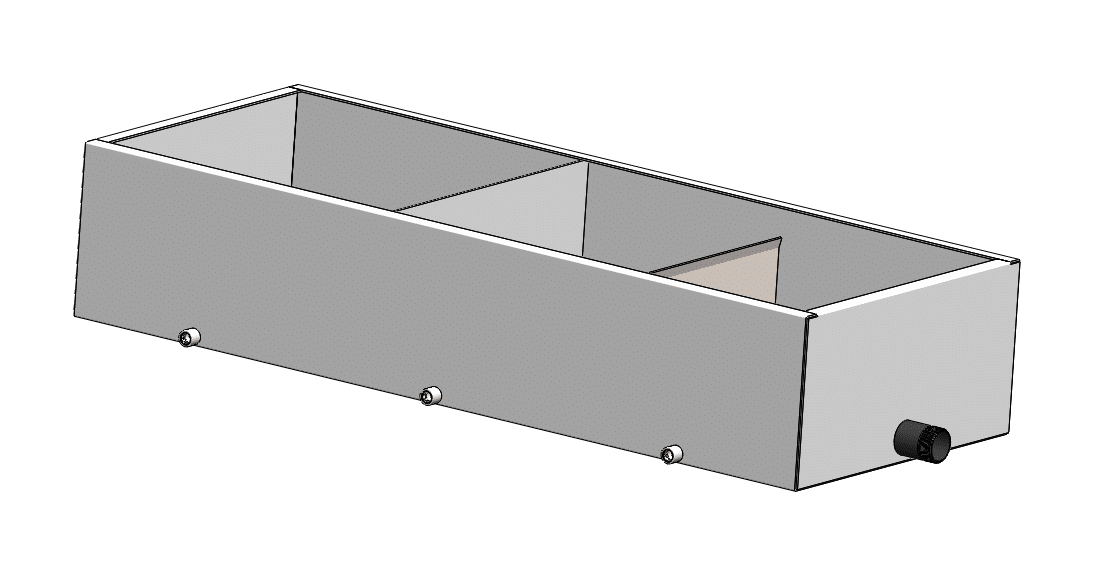
The WST Series uses internal weirs and baffles to slow water flow and encourage suspended solids to settle. The clarified water can then be reused in the process or sent to additional filtration. Kramer Industries offers multiple configurations and capacities to support different finishing operations.
How a Water Settling Tank Works
A Water Settling Tank works by slowing the movement of wastewater so suspended particles have enough time to separate from the liquid and settle toward the bottom. Internal weirs and baffles control the flow through the tank, helping create conditions that promote solids separation.
The WST Series features a sloped tank floor with an outlet for simplified sludge removal. As solids accumulate, they can be removed from the tank rather than continuously circulating through the finishing process. Clarified water can then be reused where appropriate or directed to further filtration.
This same gravity-settling principle is used in many settlement tanks where heavier suspended material is separated from liquid. The effectiveness of settling depends on factors such as particle size and density, water flow, retention time, and tank configuration.
Wastewater Management for Mass Finishing
Mass finishing processes can generate wastewater containing media fines, metal particles, compound residue, and other suspended solids. Wastewater process tanks provide a controlled stage where these materials can begin to separate before water moves to reuse, filtration, or disposal.
WST Settling Tanks are intended for applications such as vibratory finishing, deburring, edge radiusing, metal polishing, burnishing, and general mass finishing. These processes can continuously introduce fine solids into process water, making wastewater management an important part of maintaining a stable finishing operation.
Kramer Industries provides the WST Series in multiple capacities so the settling system can be matched to different processing requirements. The tanks are available with durable carbon steel or stainless steel construction, while custom configurations can be provided for specialized applications.
Settling and Solids Separation
The primary function of a Water Settling Tank is physical separation. Wastewater enters the system and moves through a controlled path created by the internal configuration. As the velocity of the water decreases, heavier suspended particles can settle instead of remaining in circulation.
Settlement tanks can provide a practical first treatment stage because the process does not depend solely on fine filtration to remove larger settleable solids. Removing this material before additional treatment can reduce the solids load reaching downstream filtration equipment.
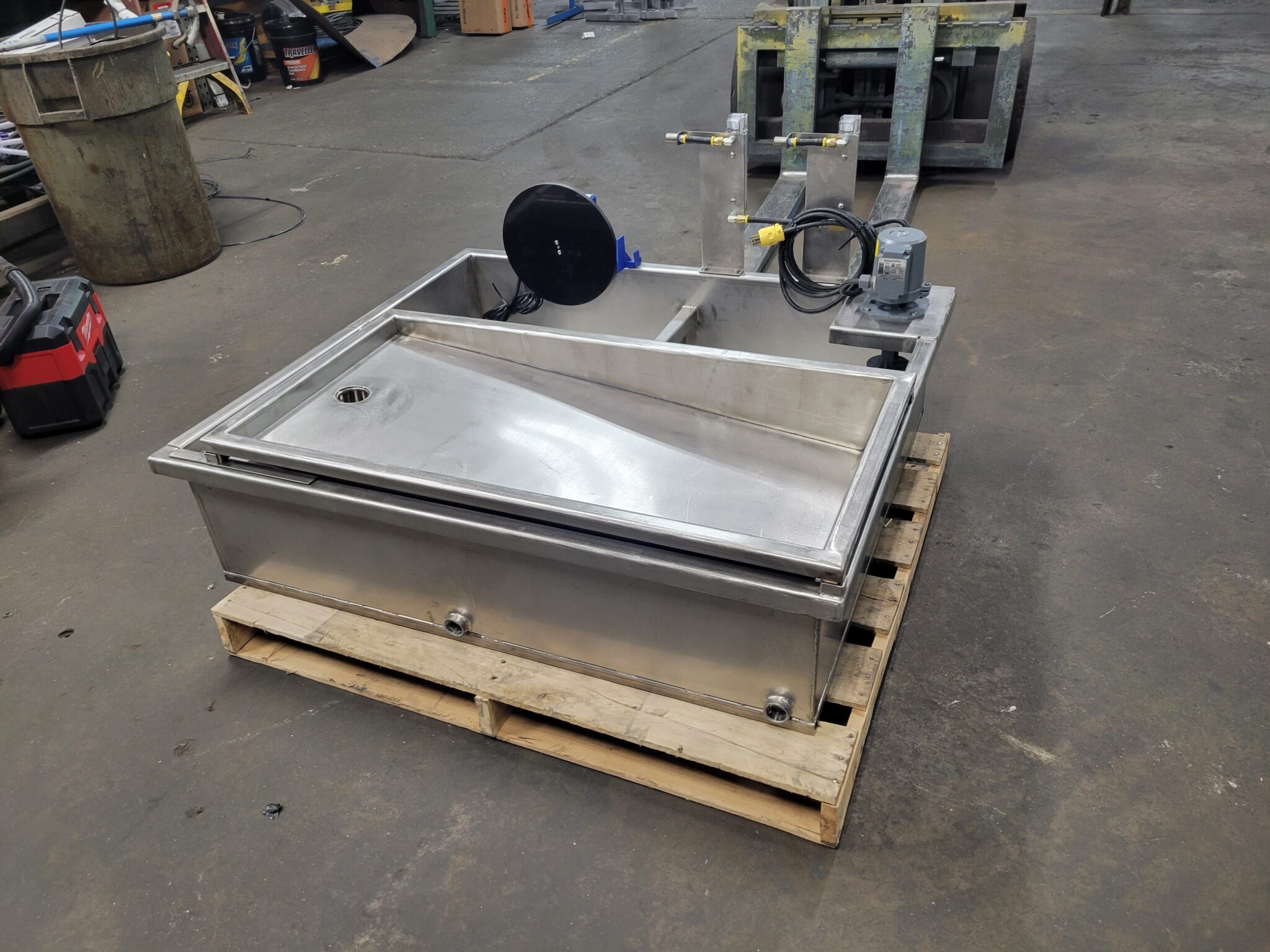
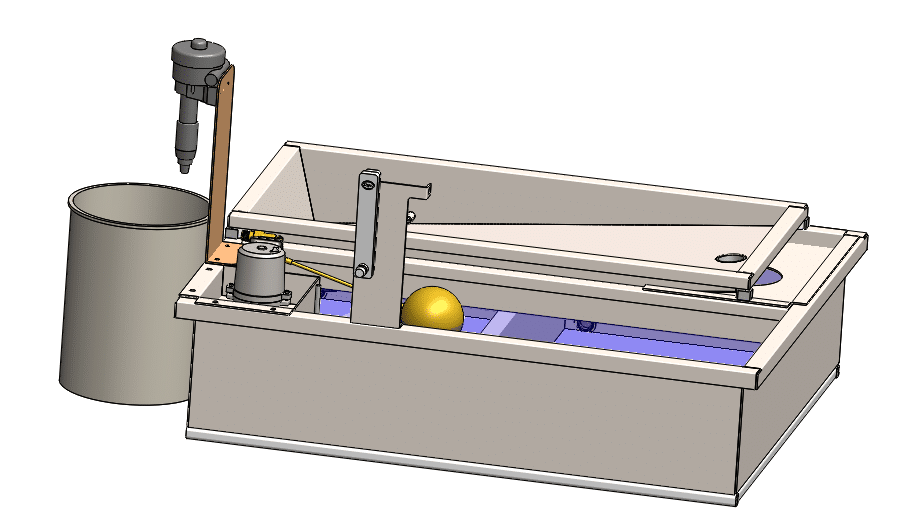
The WST Series also offers an optional additional upper tray on Model WST-54-D for faster, double separation and easier sludge cleaning. This configuration provides an additional separation stage for applications where improved solids handling is required.
Water Reuse and Process Efficiency
A Water Settling Tank can support water reuse by reducing the concentration of suspended solids before process water is returned to finishing equipment. Cleaner process water can help maintain more consistent operating conditions while reducing the amount of contaminated water requiring disposal.
Wastewater process tanks can also support a broader water-management strategy when combined with filtration, compound control, and appropriate maintenance. Optional WST equipment includes water and compound automation systems, oil skimmer integration, and flow-meter integration.
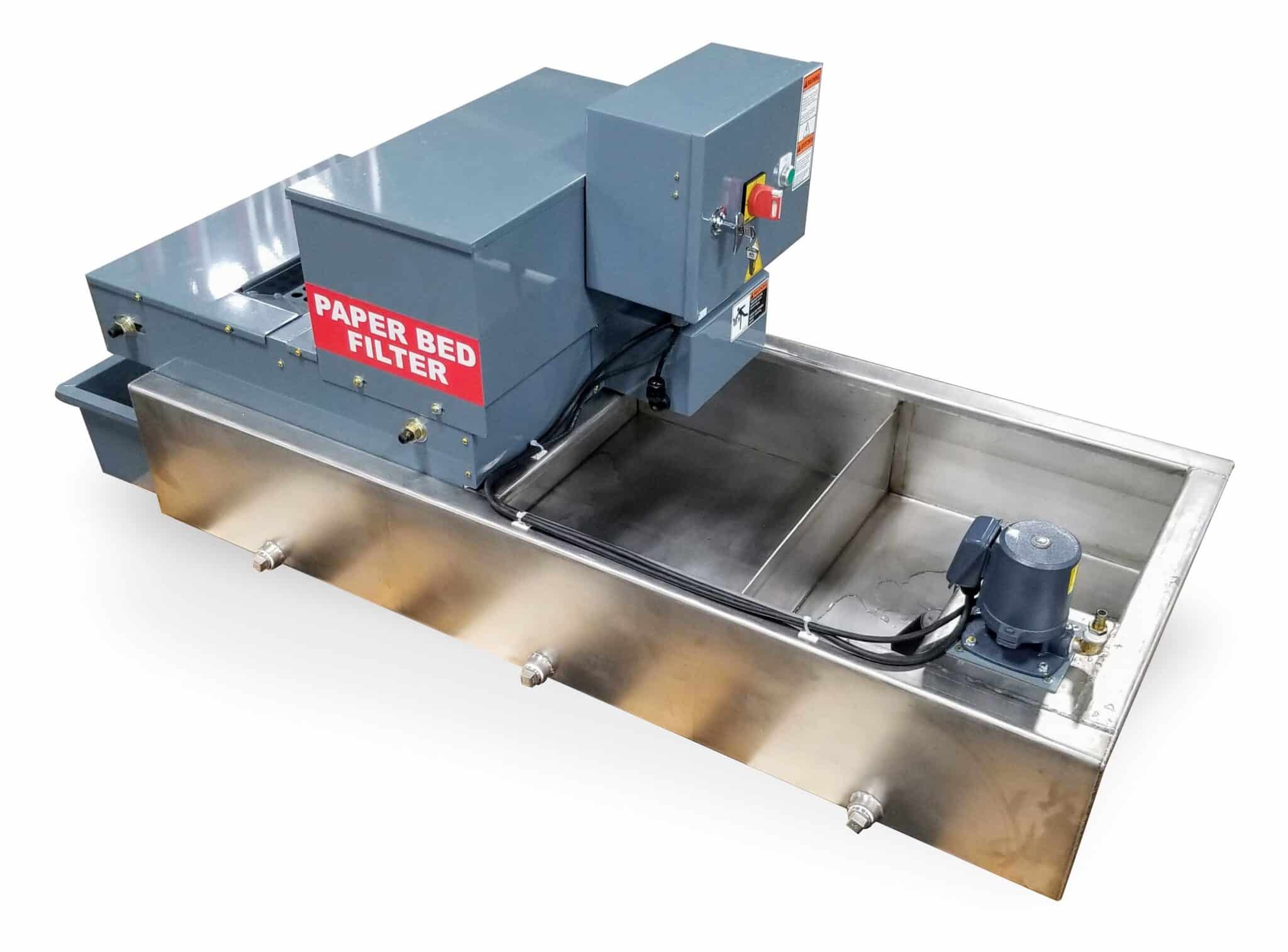
For operations requiring a higher level of clarification, the WST Series can be integrated with automatic paper bed filtration. The filtration system continuously removes finer particles using disposable filter media. The system can also include automatic filter advancement, sludge collection, water replenishment, and controlled compound addition.
Kramer Industries provides these options so the wastewater system can be configured according to the finishing process, water-quality requirements, and expected solids load.
WST Settling Tanks vs. Well-Water Settling Applications
Some users searching for a settling tank for well water are looking for a system that allows sediment such as sand or other suspended particles to separate before water reaches subsequent treatment equipment. The general gravity-settling principle is similar, but equipment selection depends on the actual water source, contaminants, flow rate, and treatment requirements.
The WST Series is specifically designed around wastewater from vibratory finishing and other mass finishing operations. Therefore, someone looking specifically for a settling tank for well water should select equipment based on the requirements of that water-treatment application rather than assume that an industrial finishing tank is automatically suitable.
Similarly, settlement tanks used in industrial processing can vary significantly from tanks designed for municipal, residential, or groundwater applications. The intended process and contaminants should always determine system selection.
Selecting a Water Settling Tank
When selecting a Water Settling Tank, important considerations include wastewater volume, solids concentration, required retention time, available floor space, construction material, downstream filtration, and whether the clarified water will be reused or sent to another treatment stage.
The WST Series is available in multiple capacities to support different system requirements. The available models range from 25-gallon through 300-gallon capacities, with different combinations of weirs and baffles. The exact technical specifications should be reviewed when selecting a model.
For finishing operations with higher water-clarity requirements, additional filtration can be incorporated rather than relying on settling alone. Wastewater process tanks can therefore function as one component of a broader treatment and recirculation process.
Kramer Industries also offers custom configurations for specialized requirements, allowing the settling and filtration arrangement to be adapted to the finishing operation.
Key Features
- Durable carbon steel or stainless steel construction
- Compact footprint and low-profile design for easy installation
- Sloped tank floor with outlet for simplified sludge removal
- Internal weirs and baffles to promote efficient solids separation
- Available in multiple capacities to match system requirements
- Custom configurations available for specialized applications
- Optional water and compound automation systems
- Optional oil skimmer and flow meter integration
- Optional additional upper tray for faster, double separation, and easier to clean sludge (Model WST-54-D)
Applications
WST Series Settling Tanks are commonly used in industries where vibratory finishing, deburring, or surface preparation processes generate wastewater containing fine solids.
Typical applications include:
- Vibratory finishing systems
- Deburring and edge-radiusing operations
- Metal polishing processes
- Burnishing applications
- General mass finishing operations
By clarifying process water before reuse or discharge, settling tanks can help maintain consistent finishing performance while reducing water consumption and disposal requirements.
Available Models
WST Series Specifications |
|||||
|---|---|---|---|---|---|
Model |
Capacity |
Width |
Length |
Height |
Configuration |
WST-25 |
25 gallons | 24″ | 24″ | 12″ | 1 weir, 1 baffle |
WST-50 |
50 gallons | 24″ | 48″ | 12″ | 2 weirs, 1 baffle |
WST-75 |
75 gallons | 24″ | 60″ | 12″ | 2 weirs, 1 baffle |
WST-100 |
100 gallons | 24″ | 96″ | 12″ | 3 weirs, 1 baffle |
WST-150 |
150 gallons | 30″ | 96″ | 12″ | 3 weirs, 1 baffle |
WST-300 |
300 gallons | 60″ | 72″ | 16″ | 3 weirs |
Optional Paper Bed Filtration (Model WST-FB-5)
For applications requiring a higher level of water clarity, WST systems can be integrated with automatic paper bed filtration. These systems continuously remove fine particles from process water using disposable filter media.
Features of paper bed filtration include:
- Automatic filter bed advancement as media loads with solids
- Stainless steel clean water tank with two weirs and drain connections
- Sludge collection box for captured solids and used filter media
- Optional float valve for automatic water replenishment
- Optional metering pump for controlled compound addition
When combined with settling tanks, paper bed filtration provides a complete solution for wastewater clarification, helping maintain consistent finishing performance while minimizing water consumption and disposal costs.
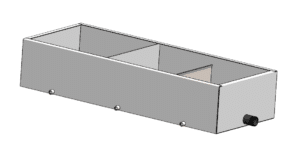
WST-75 Settling Tank
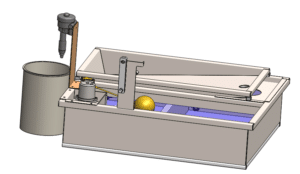
WST-54-D left 3D
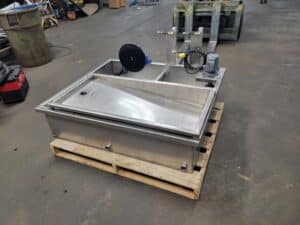
WST-54-D Settling Tank
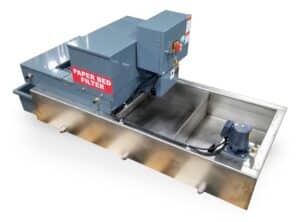
WST-FB-5 Auto Filter Bed
Related Products
-

EV Series – Heavy-Duty Grade, Tub-Style, Floor Model, Vibratory Tumbler
$12,995.00 Learn More The EV Series is engineered for production environments and heavy usage. Multiple sizes are available with customizable sizes commonly manufactured. One of the most heavy duty vibratory systems available.
 -

Liquid Burnishing Compounds
Price range: $39.95 through $139.75 Learn MoreThe range of Liquid Finishing Compounds for mass finishing are used in all types of tumbling. All are pH balanced and concentrated for optimal performance. Safe to use with all tumbling media types. -

MB Series – Heavy-Duty Grade, Mini-Bowl Style, Vibratory
$729.00 Learn MoreThe MB Series is ideal for shorter cycle times and small batch runs. Economical and durable, the MB Series are great ?starter? systems for those looking to get into mass finishing or need a unit for scale-up testing. Some systems can be upgraded for use with steel tumbling media.
-

Plastic Tumbling Media
$3.27 Learn MorePlastic Tumbling Media is recommended for general purpose metal removal, pre-plate finishing, and moderate cutting. Plastic Tumbling Media is ideal for soft metals such as brass and aluminum or for stringy materials to avoid rolling the burr into a hole.