VIBRATORY TUMBLING SYSTEM – VIBRATORY TUMBLERS
Vibratory tumblers are widely used for batch and continuous parts deburring, polishing, burnishing, and surface finishing. The rolling action of the media and parts removes material from pockets, recesses, and bores, making these systems suitable for a wide range of part sizes and shapes. Kramer Industries provides vibratory finishing systems for applications ranging from small-batch processing to high-volume production.
To achieve an optimal finish, vibratory finishing equipment creates a controlled cutting action by rapidly vibrating the processing tub. The movement causes the tumbling media and parts to work against each other, producing consistent abrasion that removes burrs and improves surface quality. Different media can be used in multiple processing stages to achieve the required finish.
Vibratory tumblers are available in bench models for small parts and batches as well as larger tub and bowl systems for large parts and production loads. Their short-stroke movement can process delicate, large, or complex parts while maintaining controlled finishing action.
Benefits
- Wide Variety of Load Sizes
- Wet or Dry Processing
- Accommodates Small and Large Parts
- Consistent and Efficient Tumbling
- Semi-automated vibratory polishing
- Rolling Action to Protect Fragile Parts
- Short Cycle Times
- Built-In Separating in Some Models
- Continuous Processing; Flow-Through Production
Applications
- Heavy and Light Deburring
- Vibratory Polishing
- Burnishing
- Deflashing
- Cleaning and Rust Removal
- Scale Removal
- Drying Parts
Typical Uses
- Large Batch Production Runs
- Heavy Loads
- Tumbling Large Parts
- R&D and Lab Testing
- Small Batch Runs
- Drying Parts
- Deburring Metal Parts
- Deflashing Plastic Parts
- Polishing Metals and Plastics
How Vibratory Finishing Systems Work
A vibratory finishing machine uses a motor-driven shaft with eccentric weights to create controlled vibration within the processing tub or bowl. Parts and finishing media move together in a rolling pattern, allowing the media to contact edges, surfaces, recesses, and other areas that require finishing.
The process can be adjusted through equipment configuration, media selection, compound chemistry, processing time, and other operating conditions. This makes vibratory finishing suitable for removing sharp edges and burrs, rounding edges, polishing surfaces, and preparing parts for subsequent processes.
Types of Vibratory Finishing Equipment
Vibratory finishing systems are available in different configurations to accommodate production volume, part size, and finishing requirements.
Bowl-Style Vibratory Tumblers
Bowl-style systems provide a circular processing path and are commonly used for small to medium-sized parts and batch production. They are available in different capacities and can support deburring, polishing, burnishing, cleaning, and other finishing applications.
Tub-Style Vibratory Tumblers
Tub-style systems provide a longer processing area and are particularly useful for large, long, heavy, or irregularly shaped parts. They can also accommodate substantial production loads and may be configured for automated loading and unloading.
Continuous Vibratory Systems
Continuous systems are designed for production environments where parts need to move through the finishing process without stopping between batches. They can be integrated with material handling and separation equipment to support automated production workflows.
Vibratory Finishing Equipment for Different Applications
Vibratory finishing equipment can process materials including aluminum, brass, copper, iron, stainless steel, plastics, and other components. The appropriate machine depends on the part geometry, material, required surface finish, production volume, and finishing objective.
Heavy-duty systems can handle large loads and demanding deburring operations, while smaller machines can be used for laboratory testing, product development, and smaller production batches.
A vibratory polishing machine can also be configured for finer finishing stages after heavier deburring or edge-breaking operations. Selecting the correct media and compound is important for achieving a consistent surface appearance.
Vibratory Deburring Equipment
Vibratory deburring equipment is commonly used to remove sharp edges, burrs, projections, and machining marks from manufactured parts. The rolling action allows finishing media to contact multiple surfaces simultaneously, making the process suitable for parts with complex geometries.
The process can be used for machined, stamped, molded, forged, and die-cast components. Different media types and finishing conditions can be selected according to the amount of material that needs to be removed and the desired final surface.
Vibratory Tumblers vs. Rotary Barrel Tumblers
Both vibratory and rotary barrel systems use finishing media to process parts, but their movement and typical applications differ.
Vibratory tumblers move parts and media through a controlled oscillating motion, allowing efficient contact with surfaces, recesses, and bores. They are often suitable for delicate, large, or complex parts and can be readily adapted for automated processing.
Rotary barrel tumblers rotate the entire load inside a barrel. They can be effective for certain batch-finishing applications but may be less suitable for large or delicate parts.
The appropriate system depends on part geometry, material, desired finish, production volume, and process requirements rather than one method being universally better.
Selecting the Right Vibratory Finishing System
Consider the following when selecting a system:
- Part size, weight, and geometry
- Material and surface condition
- Required deburring or polishing level
- Desired surface finish
- Production volume
- Batch or continuous processing requirements
- Wet or dry finishing requirements
- Media and compound requirements
- Automation and separation needs
For example, long or oversized components may require a tub-style system, while smaller batches can often be processed in bowl-style equipment. High-volume production may benefit from continuous processing and automated loading or unloading.
Kramer Industries can help determine the appropriate equipment configuration based on the part, finishing objective, production requirements, and desired cycle time.
Media and Grit Selection
The media used in a vibratory system has a major effect on the finishing result. Coarser or more aggressive media can provide faster material removal and deburring, while finer media can support polishing and surface refinement.
The appropriate grit or media size depends on the part material, existing surface condition, burr size, desired finish, and stage of the process. A multi-stage process may use more aggressive media first and progressively finer media for subsequent finishing.
Vibratory Finishing Equipment Supplier
When choosing a vibratory finishing equipment supplier, consider the range of equipment available, application support, media options, automation capabilities, and ability to test or develop the process for your parts.
Kramer Industries offers vibratory tumblers in multiple configurations and capacities for small-batch, production, and specialized finishing applications. Testing can help identify the appropriate combination of machine, media, compound, and processing conditions before implementation.
When a Project Needs Finishing, Start Here.
The right vibratory system can improve finishing consistency, reduce manual handling, and support efficient deburring and polishing operations. Kramer Industries provides vibratory finishing solutions for a broad range of industrial applications.
Frequently Asked Questions (FAQs)
Q1. What is the best vibratory rock tumbler for the money?
Ans: The most suitable vibratory tumbler depends on the part size, production volume, material, finishing objective, and required features. A smaller bench or bowl system may suit limited batches, while larger tub systems are better suited to heavy loads or production applications.
Q2. Are vibratory tumblers better than rotary tumblers?
Ans: Neither system is universally better. Vibratory tumblers are often suited to delicate, large, complex, or automation-focused applications, while rotary tumblers can be effective for specific batch-finishing requirements. The appropriate choice depends on the parts, media, desired finish, and production requirements.
Q3. What grit to use in a vibratory rock tumbler?
Ans: The appropriate grit depends on the material being processed and the desired finish. Coarser and more aggressive media are generally used for heavier deburring or material removal, while finer media are used for polishing and surface refinement.
Q4. What can a vibratory finishing machine be used for?
Ans: A vibratory finishing machine can be used for deburring, edge rounding, polishing, burnishing, deflashing, cleaning, rust and scale removal, and drying. The exact application depends on the machine, media, compound, and part requirements.
Q5. How do I choose the right vibratory finishing equipment?
Ans: Consider the part size and geometry, material, desired finish, amount of material removal, production volume, processing method, and automation requirements. Machine capacity and the appropriate media and compound should also be matched to the application.
Vibratory Finishing Equipment Products:
Showing all 7 results
-

MB Series – Heavy-Duty Grade, Mini-Bowl Style, Vibratory Tumbler
Price range: $299.00 through $3,999.00 Learn More The MB Series is ideal for shorter cycle times and small batch runs. Economical and durable, the MB Series are great ‘starter’ systems for those looking to get into mass finishing or need a unit for scale-up testing. Some systems can be upgraded for use with steel tumbling media.
 -
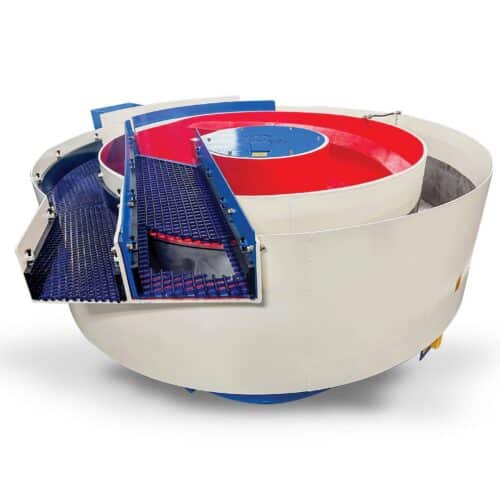
CVB Series – Vibratory Combination Finisher-Dryer
$23,995.00 Learn MoreThe DB Series is ideal for shorter cycle times and for those new to mass finishing. Two different sizes are available for large and small batch sizes. Economical and durable, the DB Series are one of our most popular vibratory tumblers.
-
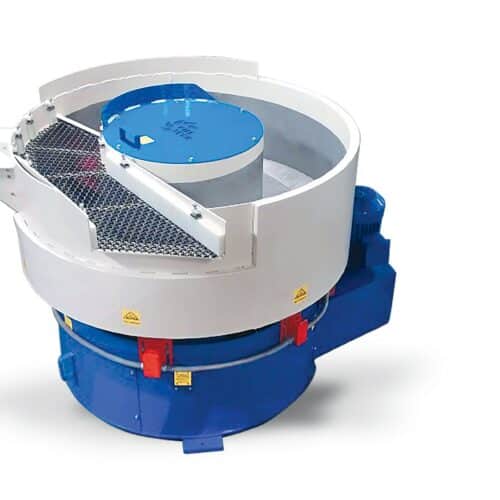
DVB Series – Vibratory Dryer Systems
$21,995.00 Learn MoreThe DB Series is ideal for shorter cycle times and for those new to mass finishing. Two different sizes are available for large and small batch sizes. Economical and durable, the DB Series are one of our most popular vibratory tumblers.
-

EVT Series – Heavy-Duty Grade, Tub-Style, Floor Model, Vibratory Tumbler
$8,995.00 Learn MoreThe EVT Series Heavy-Duty Grade, Bowl-Style, Floor Model, Vibratory Tumble is the most commonly used, highly versatile, tub style vibratory systems. These tumblers feature, heavy-duty motors and are designed for large quantities of parts and for large, heavy, and/or long parts. Available in wide multitude of capacities and with a wide variety of options and upgrades for deburring and polishing.
-

EVB Series – Heavy-Duty Grade, Bowl-Style, Floor Model, Vibratory Tumbler
$17,495.00 Learn MoreThe EVB Series bowl-style vibratory tumblers are compact, floor-model systems. These heavy-duty tumblers are designed for production environments where large quantities of parts need to be finished. The screen deck provides automated separation of media and parts. -

EV Series – Heavy-Duty Grade, Tub-Style, Floor Model, Vibratory Tumbler
$12,995.00 Learn MoreThe EV Series is engineered for production environments and heavy usage. Multiple sizes are available with customizable sizes commonly manufactured. One of the most heavy duty vibratory systems available. -

DB Series – Industrial Grade, Tub-Style, Floor Model, Vibratory Tumbler
$3,845.00 Learn MoreThe DB Series is ideal for shorter cycle times and for those new to mass finishing. Two different sizes are available for large and small batch sizes. Economical and durable, the DB Series are one of our most popular vibratory tumblers.