In fabrication shops, restoration facilities, and industrial manufacturing environments, surface preparation is often required before parts move to the next stage of production. Materials may arrive with rust, mill scale, coatings, or surface inconsistencies that must be removed to achieve the desired finish. Abrasive sandblasting equipment is designed to address these challenges by using controlled abrasive media to clean, shape, or prepare surfaces efficiently.
Abrasive sandblasting equipment operates by propelling abrasive media at high velocity against a surface. The impact removes contaminants, creates surface profiles, and prepares materials for coating, bonding, or finishing processes. For companies working with metal fabrication, restoration, or industrial maintenance, properly configured abrasive sandblasting equipment helps improve consistency, reduce rework, and support overall production efficiency. Kramer Industries provides abrasive media and equipment solutions to help operators select the appropriate blasting setup for their specific applications.
Core Components of Abrasive Sandblasting Equipment
Most abrasive sandblasting equipment includes several key components that work together to deliver consistent blasting performance:
- Air supply – Compressed air provides the energy required to accelerate abrasive media. Air volume and pressure directly influence blasting speed and productivity.
- Blast pot or delivery system – Stores abrasive media and meters it into the airflow. Pressure systems are commonly used for higher production applications.
- Blast hose and nozzle – The hose carries the abrasive-air mixture, while the nozzle controls velocity, pattern, and coverage area.
- Containment system – Blast cabinets, rooms, or open blasting setups manage dust and debris while protecting operators and surrounding areas.
- Dust collection and recovery – Filtration and recovery systems improve visibility, reduce waste, and support efficient media reuse.
When these components are properly matched, abrasive sandblasting equipment can deliver consistent surface preparation while minimizing downtime and operating costs.
Common Uses for Abrasive Sandblasting Equipment
Abrasive sandblasting equipment is used across a wide range of industrial and maintenance applications. The process is not limited to cleaning surfaces but also supports preparation and finishing requirements.
Typical applications include:
- Surface preparation for coatings – Removing rust, scale, or coatings to improve paint and coating adhesion
- Deburring and edge radiusing – Smoothing sharp edges after machining or fabrication
- Surface texturing – Creating specific finishes for functional or cosmetic purposes
- Restoration work – Cleaning and restoring metal, concrete, or stone surfaces
Different applications require different blasting approaches. Cleaning structural steel may require aggressive media and higher pressure, while finishing precision parts may require softer media and controlled blasting conditions.
Types of Abrasive Sandblasting Equipment
Selecting the correct type of abrasive sandblasting equipment depends on part size, production volume, and operational requirements.
- Blast cabinets – Used for smaller parts and controlled environments. Provide precise blasting control and efficient media containment.
- Blast rooms – Designed for larger components or higher throughput. Operators work inside a contained space using full-scale blasting systems.
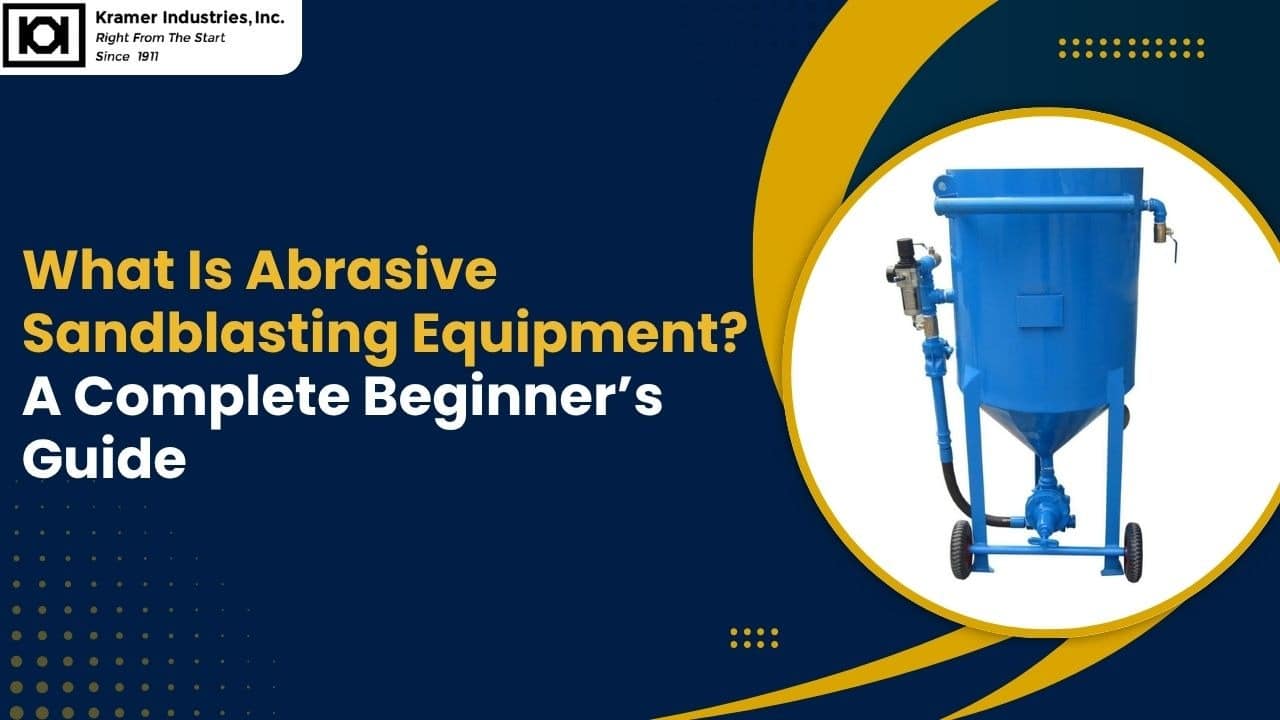
- Portable blasting systems – Provide flexibility for fieldwork, maintenance applications, and large structures that cannot be moved.
Each configuration offers different advantages. Cabinets provide precision, blast rooms support higher production, and portable systems allow for on-site flexibility.
The Role of Abrasive Media
Abrasive media selection plays an important role in how abrasive sandblasting equipment performs. Different media types affect cutting speed, surface profile, and final finish.
Common abrasive media include:
- Aluminum oxide – A sharp, durable abrasive used for aggressive cleaning and surface preparation
- Glass beads – Used for smoother finishes and cosmetic surface treatments
- Steel shot or grit – Suitable for heavy-duty applications and reusable blasting systems
- Garnet and specialty media – Selected for specific performance or environmental requirements
Using the correct abrasive media helps improve finish quality, reduce cycle times, and control operating costs.
Why Abrasive Sandblasting Equipment Matters
Properly configured abrasive sandblasting equipment can improve multiple aspects of an operation, including:
- Improved throughput and reduced cycle times
• Consistent surface quality and finish control
• Better coating adhesion and durability
• Reduced media consumption and operating costs
By aligning equipment type, abrasive media, and process parameters, companies can achieve more predictable and efficient surface preparation.
Conclusion
Abrasive sandblasting equipment plays a critical role in preparing surfaces for manufacturing, coating, and restoration processes. By using controlled abrasive media and properly matched system components, these machines help remove contaminants, create surface profiles, and improve overall production consistency.
With experience in abrasive media and surface finishing solutions, Kramer Industries helps operators select abrasive sandblasting equipment suited to their application requirements. Choosing the right equipment, media, and setup allows manufacturers and maintenance teams to improve efficiency while achieving reliable surface preparation results.
Related Articles