Choosing sandblasting equipment is far more than selecting a machine. It is a long-term operational investment that directly influences productivity, surface quality, safety, maintenance schedules, and overall process stability. The right sandblasting equipment streamlines workflow, reduces rework, and extends the lifespan of both abrasive media and critical components. Poorly matched equipment, on the other hand, can slow production, increase downtime, and introduce avoidable wear across your system. Understanding which factors matter most ensures your investment aligns with production throughput, material types, finishing requirements, and industry-specific standards.
Know Your Application and Desired Finish
Every blasting project begins with a surface requirement. Before comparing different sandblasting equipment, identify the substrate, level of contamination, coating type, and the finish you need to achieve. Metals require different blast profiles than composites or plastics, while sensitive materials demand tighter control over blasting pressure and nozzle selection. Cabinet size, airflow, reclaim design, and blast gun configuration should all support the finish specification. When your sandblasting equipment matches your application requirements, you reduce abrasive media waste, avoid over-blasting, and maintain consistent finishing results while lowering operating costs.
Match the Machine to the Volume of Work
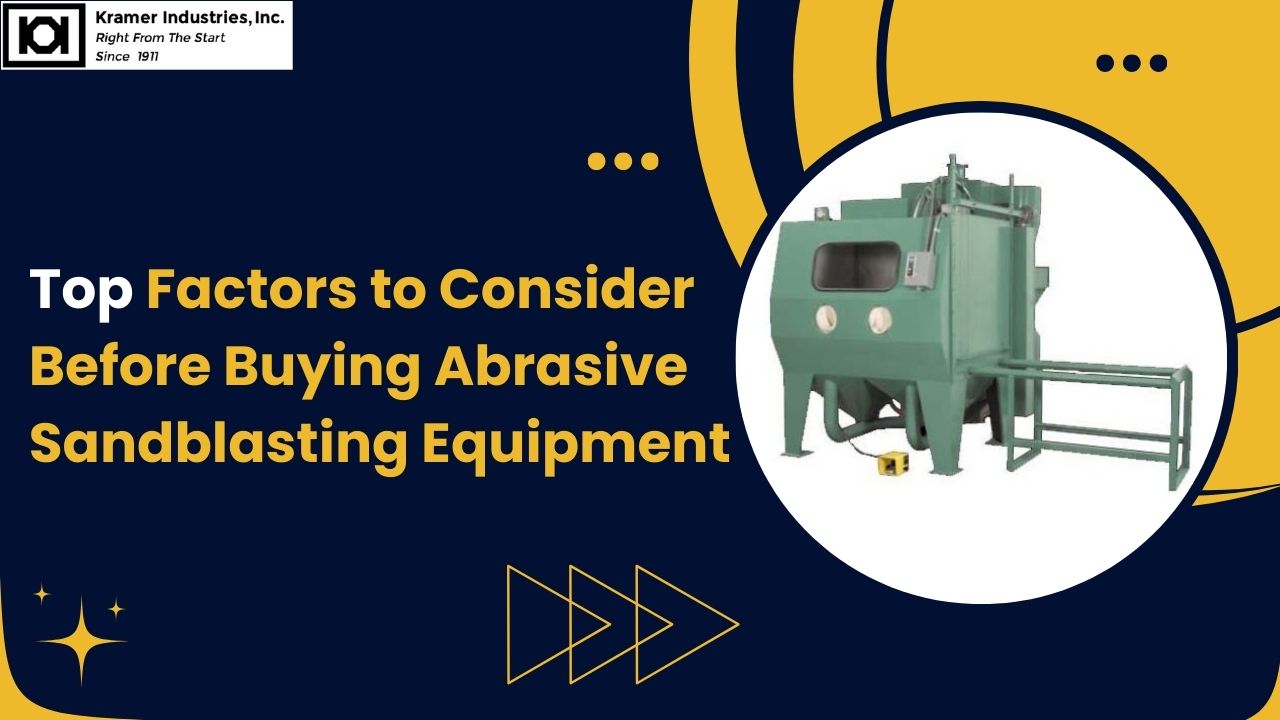
Production volume influences nearly every sandblasting equipment decision. Small blast cabinets are well suited for low-throughput environments, prototype work, or detailed components, while larger blast cabinets, continuous-feed systems, or pressure blast pots are better suited for industrial-scale production. Undersized equipment slows production, increases operator fatigue, and accelerates component wear, while oversized systems can increase overhead and consume unnecessary resources. Selecting sandblasting equipment that supports both your current production requirements and future growth provides the best long-term value.
Understand Media Compatibility and Performance
Abrasive media selection should always complement the design and capabilities of your sandblasting equipment. Hard abrasives such as aluminum oxide and silicon carbide require durable wear-resistant components and efficient reclaim systems. Softer blasting media, including plastic media and glass beads, require carefully controlled blasting pressure to maintain consistent finishes without damaging delicate parts.
When abrasive media and sandblasting equipment are properly matched, blasting performance becomes more predictable, abrasive life is extended, and surface profiles remain consistent throughout production. This reduces rework while lowering the overall cost of ownership.
Evaluate Dust Collection and Safety Requirements
An efficient dust collection system is essential for maximizing sandblasting equipment performance. High-quality dust collectors improve operator visibility, protect workers from airborne dust, and prevent abrasive fines from circulating back into the blasting system. Effective dust extraction also minimizes wear on nozzles, valves, reclaim systems, and other critical components.
Proper dust management not only improves workplace safety but also extends equipment life, preserves abrasive media quality, and helps facilities comply with environmental and industry regulations.
Consider Ergonomics and Operator Experience
Operator comfort plays a significant role in maximizing productivity with sandblasting equipment. Look for systems equipped with adjustable gloves, bright interior lighting, clear viewing windows, smooth operating controls, and convenient loading access. Features that minimize operator fatigue allow users to maintain greater accuracy and consistency throughout extended blasting operations.
Well-designed ergonomic features often distinguish basic sandblasting equipment from systems that significantly improve production efficiency while reducing operator errors.
Review Maintenance Access and Long-Term Serviceability
Because sandblasting equipment operates under constant abrasive conditions, routine maintenance is unavoidable. Before purchasing, evaluate how easily wear components can be inspected, accessed, and replaced. Equipment designed with modular assemblies and quick-access maintenance panels minimizes downtime and simplifies repairs.
Long-term equipment reliability depends not only on build quality but also on how quickly maintenance personnel can restore the system to full operation when replacement parts are required.
Assess Total Cost of Ownership, Not Just Purchase Price
The purchase price represents only one portion of the overall investment in sandblasting equipment. Long-term operating costs include abrasive media consumption, filter replacement, reclaim efficiency, nozzle wear, energy usage, maintenance labor, and production downtime.
Although premium reclaim systems and heavy-duty wear components may increase the initial investment, they frequently reduce maintenance expenses, improve production efficiency, and lower total operating costs throughout the equipment’s service life.
Confirm Compliance and Industry-Specific Requirements
Different industries require different sandblasting equipment capabilities. Aerospace, medical manufacturing, automotive refinishing, foundries, fabrication facilities, and shipyards each have unique performance and compliance requirements. Precision manufacturing may require advanced contamination control and filtration systems, while heavy industrial operations often demand rugged construction and larger blasting capacities.
Selecting sandblasting equipment designed to meet your industry’s standards helps ensure consistent product quality, improved operational efficiency, and compliance with regulatory requirements.
Conclusion
Selecting the right sandblasting equipment requires a thorough understanding of your production volume, surface finish requirements, abrasive media compatibility, maintenance expectations, and operating environment. Evaluating these factors before purchasing helps improve productivity, deliver consistent surface finishes, reduce maintenance costs, and enhance operator safety.
Whether you are upgrading an existing blasting operation or investing in a new system, choosing high-quality sandblasting equipment provides long-term value through greater efficiency, improved reliability, and consistent finishing performance. Kramer Industries Inc. offers a wide range of abrasive blasting equipment and technical expertise to help manufacturers select the right solution for their specific surface preparation and finishing applications.
Frequently Asked Questions (FAQs)
- Which sandblasting equipment should I choose?
The best sandblasting equipment depends on the material being processed, the level of surface contamination, production volume, abrasive media, and the desired surface finish.
- Does production volume affect equipment selection?
Yes. Low-volume operations often benefit from smaller blast cabinets, while high-production facilities typically require larger cabinets, pressure blast systems, or continuous-feed equipment to maximize efficiency.
- Why is abrasive media compatibility important?
Matching abrasive media with the appropriate sandblasting equipment improves blasting efficiency, extends media life, protects wear components, and delivers more consistent surface finishes.
- Is a dust collection system necessary?
Yes. A properly designed dust collection system improves operator safety, increases visibility, extends equipment life, maintains abrasive quality, and supports regulatory compliance.
- What factors influence the total cost of sandblasting equipment?
Beyond the purchase price, consider abrasive consumption, replacement parts, maintenance, reclaim efficiency, filter costs, energy usage, and production downtime when evaluating the total cost of ownership.
Related Articles