Surface preparation is one of the most important steps in any manufacturing, fabrication, or restoration process. Before a coating can adhere properly, before a weld can be inspected, and before a finished component can meet quality standards, the surface must be cleaned and conditioned appropriately. At Kramer Industries, we understand that the success of many finishing operations begins with selecting the right abrasive. This blasting media guide explores the key factors that influence media selection and how the proper abrasive can improve productivity, surface quality, and overall process efficiency.
While abrasive blasting may appear straightforward, the media chosen for the job can significantly affect cleaning performance, operating costs, equipment wear, and final surface characteristics. Understanding the differences between available blasting materials helps manufacturers and contractors make informed decisions that support consistent and repeatable results.
Why Media Selection Is Critical
Surface preparation involves much more than simply removing contaminants. The right abrasive media can eliminate rust, mill scale, coatings, oxidation, and other unwanted materials while creating the ideal surface profile for subsequent processes.
Abrasive selection directly impacts:
- Cleaning efficiency
- Surface roughness
- Coating adhesion
- Production speed
- Media consumption
- Equipment maintenance requirements
Using an abrasive that is too aggressive may damage the substrate, while a media that is too soft may fail to achieve the desired level of cleaning. This is why a comprehensive blasting media guide is valuable when evaluating surface preparation requirements.
Understanding Key Media Characteristics
Every blasting media possesses unique characteristics that determine how it interacts with a surface. Understanding these properties allows operators to select the most effective abrasive for a specific application.
Hardness
Hardness influences how aggressively the media removes contaminants and creates surface profiles. Harder abrasives typically clean faster and produce deeper anchor patterns, making them suitable for demanding surface preparation tasks.
Softer media are often preferred when preserving sensitive materials or achieving smoother finishes.
Particle Shape
Media shape plays a significant role in determining surface characteristics.
Angular abrasives cut into the substrate and generate more pronounced profiles. These media are commonly used when preparing surfaces for coatings that require strong mechanical adhesion.
Rounded abrasives tend to peen rather than cut, resulting in smoother finishes and less material removal. They are often selected for cleaning, burnishing, and cosmetic finishing applications.
Density
The density of the abrasive affects impact energy. Heavier media transfer greater force to the surface, improving cleaning speed and productivity. However, increased impact energy may not be suitable for thin materials or delicate components.
Understanding the relationship between hardness, shape, and density is an important part of any blasting media guide because these factors directly influence blasting performance.
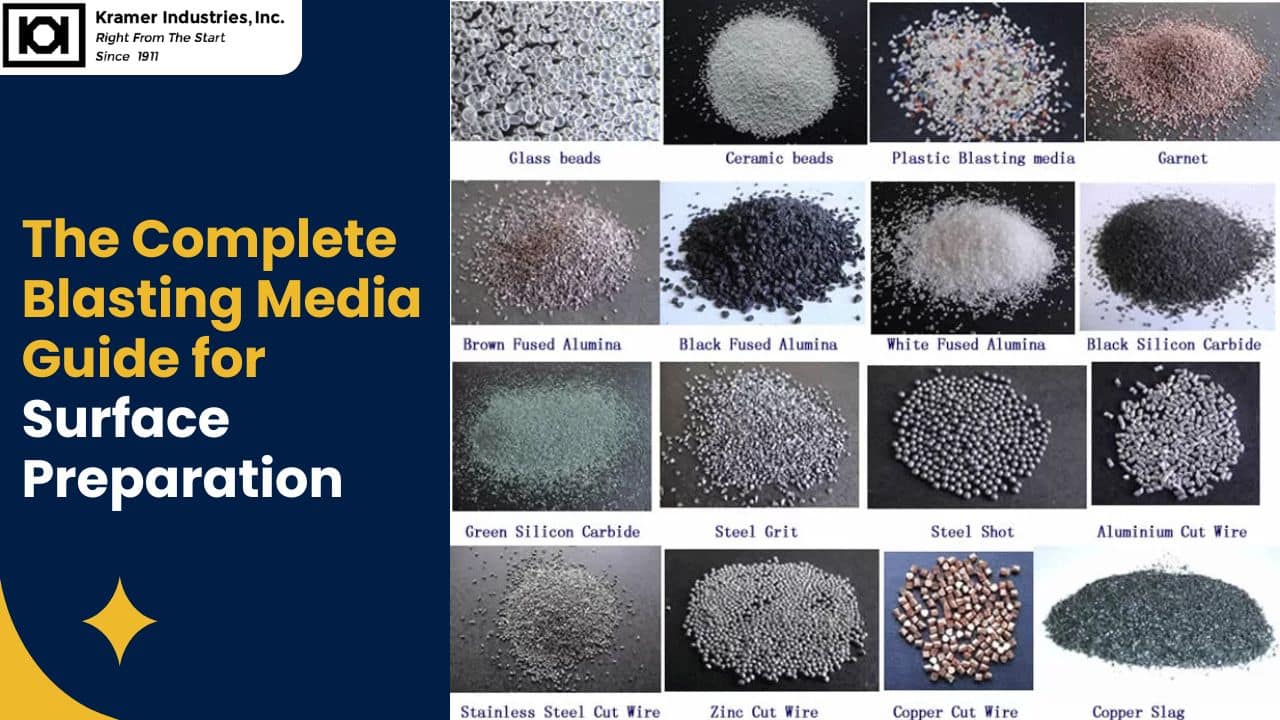
Common Types of Blasting Media
Different blasting applications require different abrasive materials. Selecting the right media depends on the substrate, contamination level, desired profile, and final finishing requirements.
Steel Shot and Steel Grit
Steel abrasives are among the most widely used media in industrial blasting operations.
Steel shot consists of spherical particles that provide effective cleaning and peening action while producing relatively smooth surface finishes. Steel grit features angular particles that offer more aggressive cutting action and deeper surface profiles.
These abrasives are highly durable and can be recycled many times in properly designed blasting systems, making them cost-effective for high-volume production environments.
Common applications include:
- Structural steel fabrication
- Foundry cleaning
- Surface preparation
- Heavy manufacturing
- Shot peening operations
Aluminum Oxide
Aluminum oxide is known for its hardness, durability, and aggressive cutting performance. It is frequently used when fast cleaning and consistent surface profiling are required.
Because of its long service life and ability to maintain sharp cutting edges, aluminum oxide performs well on steel, stainless steel, and other hard metals.
Typical applications include:
- Surface preparation
- Deburring
- Scale removal
- Coating removal
- Precision finishing
Glass Bead
Glass bead media provides a gentler blasting action compared to angular abrasives. The spherical particles clean surfaces without creating significant material removal or excessive roughness.
Manufacturers often use glass beads when cosmetic appearance is important or when maintaining dimensional accuracy is critical.
Common uses include:
- Satin finishing
- Cosmetic cleaning
- Light deburring
- Surface blending
- Peening applications
Garnet
Garnet has become increasingly popular because it combines strong cleaning performance with relatively low dust generation.
Its natural hardness and low breakdown rate allow operators to achieve consistent results while minimizing media consumption. Garnet is commonly used in both abrasive blasting and waterjet cutting applications.
Plastic Media
When coating removal is required without damaging the underlying substrate, plastic media often provides an ideal solution.
The lower hardness allows operators to remove paint, coatings, and contaminants while minimizing the risk of substrate damage. Aerospace, automotive, and composite manufacturing industries frequently rely on plastic abrasives for sensitive cleaning applications.
Matching Media to the Application
No single abrasive works best for every blasting project. Successful surface preparation requires evaluating the specific requirements of the application.
Factors to consider include:
- Base material type
- Surface condition
- Desired profile depth
- Coating specifications
- Production volume
- Equipment capabilities
- Environmental considerations
For heavy rust and mill scale removal, angular abrasives often provide the fastest cleaning rates. For decorative finishes or precision components, rounded media may deliver better results.
A thorough blasting media guide should always emphasize matching the abrasive to the overall finishing objective rather than focusing solely on cleaning speed.
The Long-Term Value of Proper Media Selection
Many manufacturers view blasting media as a simple consumable expense, but experienced operators understand that abrasive selection directly affects overall production performance.
The right media can help organizations:
- Improve throughput
- Reduce rework
- Extend equipment life
- Lower operating costs
- Improve coating performance
- Achieve more consistent results
As quality standards continue to rise across manufacturing industries, process consistency becomes increasingly important. Proper media selection supports repeatable surface preparation results that contribute to higher product quality and greater customer satisfaction.
At Kramer Industries, we help manufacturers evaluate blasting processes, abrasive options, and surface preparation requirements to identify the most effective solutions for their operations. Understanding the characteristics of different abrasives is one of the most important steps in optimizing blasting performance.
Conclusion
Selecting the right abrasive is one of the most important decisions in any surface preparation process. As this blasting media guide demonstrates, factors such as hardness, particle shape, density, and recyclability all influence cleaning performance, surface quality, and operational efficiency.
Whether the goal is aggressive rust removal, precision surface preparation, or cosmetic finishing, choosing the appropriate blasting media helps manufacturers achieve better results while controlling costs. By aligning media characteristics with application requirements, companies can improve productivity, reduce rework, and create more reliable finishing processes. To learn more about abrasive blasting materials and surface preparation solutions, contact Kramer Industries today.
Related Articles