In every mass finishing operation, the quality of the final result depends on more than just the equipment being used. While vibratory finishers provide the motion necessary for processing parts, it is the media inside the machine that performs the actual work. At Kramer Industries, we help manufacturers optimize finishing operations by selecting the right abrasives and process components. One of the most important decisions in any finishing system is choosing the appropriate vibratory tumbling media for the specific application.
Whether the goal is deburring, edge radiusing, surface smoothing, polishing, or burnishing, the media selected directly influences cycle times, surface quality, production efficiency, and operating costs. Understanding the factors that affect media performance helps manufacturers achieve more consistent and repeatable finishing results.
Why Media Selection Is So Important
Two manufacturers may operate identical vibratory finishing systems and process similar parts, yet achieve dramatically different results. In many cases, the difference comes down to media selection.
Vibratory tumbling media functions as thousands of miniature finishing tools working simultaneously throughout the process. The composition, size, shape, density, and abrasive content of the media determine how aggressively material is removed and what type of finish is produced.
Choosing the wrong media can lead to:
- Inconsistent surface finishes
- Excessive cycle times
- Media lodging issues
- Increased labor requirements
- Higher operating costs
- Unnecessary rework
Selecting the right media helps create a more efficient process while protecting valuable components from damage.
Understanding the Main Types of Vibratory Tumbling Media
Different finishing objectives require different media formulations. Understanding the primary media categories is the first step in selecting the best solution.
Ceramic Media
Ceramic media remains one of the most widely used options in industrial finishing applications. Its high density and aggressive cutting action make it suitable for demanding operations that require significant material removal.
Ceramic media is commonly used for:
- Heavy deburring
- Edge radiusing
- Surface refinement
- Scale removal
- Pre-polishing preparation
Because of its durability and long service life, ceramic vibratory tumbling media is frequently used for steel, stainless steel, castings, and other hard metals in high-volume production environments.
Plastic Media
Plastic media offers a gentler finishing action and is often selected when preserving dimensional integrity is important.
Key advantages include:
- Lower density
- Reduced part-on-part contact
- Controlled cutting action
- Better performance on softer metals
Manufacturers commonly use plastic media when processing aluminum, brass, zinc die castings, and other materials that may be susceptible to damage from more aggressive abrasives.
Specialty and Polishing Media
After deburring and surface refinement are complete, additional finishing stages may require specialized polishing or burnishing media.
These media types are designed to:
- Improve surface appearance
- Increase reflectivity
- Enhance cosmetic quality
- Prepare parts for final assembly
- Support decorative finishing applications
Industries such as medical manufacturing, aerospace, automotive, and consumer products often rely on specialty media to achieve specific appearance requirements.
Why Media Shape Matters
While media composition receives significant attention, shape selection is equally important for achieving consistent finishing results.
The geometry of the media determines how effectively it reaches different areas of a component and interacts with complex part features.
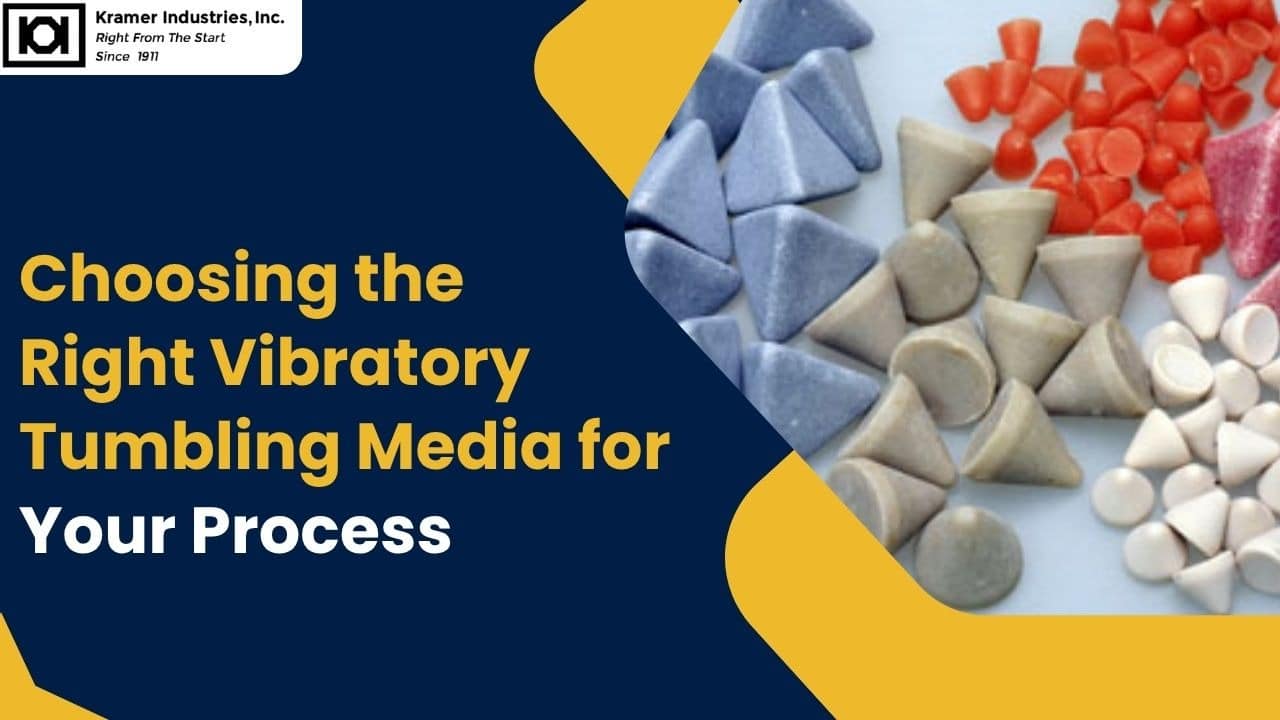
Common media shapes include:
Triangles
Triangular media performs well when accessing corners, recessed areas, and detailed geometries.
Cylinders
Cylindrical media provides broad surface contact and is commonly used for general-purpose finishing operations.
Cones
Cone-shaped media can reach holes, slots, and internal features that may be difficult to access with larger shapes.
Wedges
Wedge-shaped media is often used for components with intricate geometries that require more targeted finishing action.
Selecting the proper shape helps maximize surface coverage while reducing the risk of incomplete finishing.
Choosing the Correct Media Size
Media size is another critical consideration when selecting vibratory tumbling media.
A common guideline is to choose media that is large enough to avoid becoming lodged in holes, recesses, or slots while still being small enough to access the surfaces requiring treatment.
Using media that is too large may leave critical features untouched, while media that is too small can create lodging issues that increase labor and downtime.
Manufacturers often evaluate multiple media sizes during process development to determine the most effective balance between accessibility, productivity, and finish quality.
Matching Media to Your Finishing Objectives
Every finishing operation begins with a specific goal. Successful media selection starts by clearly defining the desired outcome before choosing an abrasive formulation.
Common objectives include:
Heavy Burr Removal
Applications requiring significant material removal typically benefit from aggressive ceramic media with higher cutting capabilities.
Surface Smoothing
Medium-cut formulations help reduce roughness while producing more uniform surface finishes.
Pre-Coating Preparation
Parts intended for plating, painting, or coating often require controlled surface refinement to improve adhesion and appearance.
Polishing and Burnishing
These applications rely on specialized media designed to enhance brightness and cosmetic quality rather than remove material.
Delicate Components
Parts with tight tolerances or fragile features often require lighter-density media that minimizes impact while still delivering effective finishing performance.
Matching the media to the intended result helps reduce process development time and improve overall efficiency.
Improving Performance Through Process Optimization
Many manufacturers assume finishing challenges are caused by equipment limitations when the actual issue is media selection. Properly selected vibratory tumbling media can often improve performance without requiring any changes to existing equipment.
Benefits of optimized media selection include:
- Reduced cycle times
- Improved finish consistency
- Lower media consumption
- Extended media life
- Increased throughput
- Reduced labor requirements
For manufacturers seeking to improve productivity while maintaining strict quality standards, media optimization often delivers one of the fastest returns on investment available within a finishing operation.
At Kramer Industries, we work with manufacturers to identify the right media, compounds, and process parameters for their specific finishing requirements. Selecting the proper vibratory tumbling media helps create repeatable processes that improve both efficiency and final product quality.
Conclusion
Choosing the right vibratory tumbling media involves much more than selecting an abrasive material. Media composition, shape, size, and cutting action all play critical roles in determining process performance and finish quality.
When properly matched to the application, vibratory tumbling media can significantly improve productivity, reduce operating costs, and deliver more consistent finishing results. Whether the goal is aggressive deburring, surface refinement, or high-quality polishing, the right media transforms a vibratory finishing system into a highly efficient production tool. To learn more about media selection and industrial finishing solutions, contact Kramer Industries today.
Related Articles