In industrial surface preparation environments, abrasive blasting requires a careful balance between performance, precision, and operator safety. While walnut blasting is widely recognized as a gentler abrasive blasting method, maintaining proper safety practices is still essential for achieving consistent results and protecting operators in daily operations.
Walnut blasting has become increasingly popular across industries such as automotive restoration, aerospace, manufacturing, and equipment maintenance because it effectively removes carbon buildup, coatings, grease, and contaminants without damaging delicate surfaces. Walnut shell media provides enough abrasive strength for cleaning applications while remaining softer than many traditional blasting abrasives.
At Kramer Industries, walnut blasting solutions are commonly used for applications that require controlled cleaning performance while preserving sensitive substrates and component integrity.
Control Airborne Dust and Particulates
One of the most important safety considerations during walnut blasting is managing airborne dust and fine particulates.
Although walnut shell media typically produces less dust than harder abrasives, blasting operations still generate airborne particles that can affect respiratory health, visibility, and overall workplace cleanliness. Proper containment systems and ventilation help create a safer and more controlled working environment.
Operators should use:
- Sealed blasting cabinets when possible
- Dust collection systems
- Proper ventilation equipment
- Controlled blasting areas
Effective dust management improves visibility during blasting operations while also reducing cleanup time and long-term exposure risks.
Always Use Proper Personal Protective Equipment
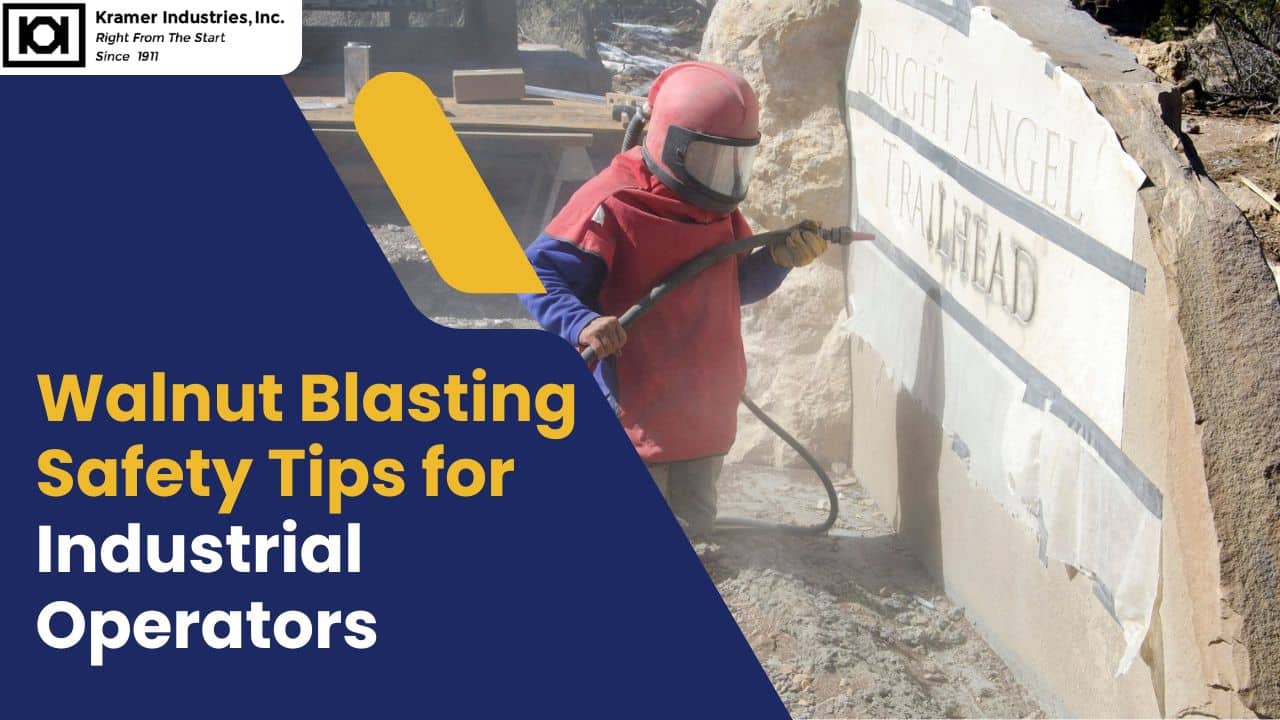
Personal protective equipment remains essential in every walnut blasting operation.
Even though walnut shell media is less aggressive than abrasives such as aluminum oxide or steel grit, blasting media still travels at high velocity and can cause injuries through direct contact or rebounding particles.
Operators should wear:
- Properly fitted respirators
- Safety goggles or face shields
- Protective gloves
- Long-sleeved protective clothing
- Hearing protection when necessary
Using the correct protective equipment improves operator safety, increases confidence during operation, and helps maintain productivity throughout the blasting process.
Maintain Proper Equipment Settings
Correct equipment setup is critical for safe and effective walnut blasting performance.
One of the major benefits of walnut shell blasting is its ability to clean surfaces without causing excessive abrasion or damage. However, incorrect air pressure settings or worn blasting components can negatively impact both safety and finish quality.
Important maintenance checks include:
- Monitoring air pressure levels
- Inspecting nozzles for wear
- Checking hose conditions
- Maintaining proper media flow rates
- Verifying blasting cabinet performance
Excessive blasting pressure can break down walnut shell media too quickly, creating unnecessary dust and reducing cleaning efficiency. Regular equipment inspection helps maintain consistent blasting patterns and minimizes operator fatigue.
At Kramer Industries, maintaining properly calibrated blasting systems is essential for achieving controlled and repeatable walnut blasting results.
Store and Handle Walnut Shell Media Properly
Walnut shell blasting media is an organic abrasive material, which means storage conditions directly affect performance.
Exposure to moisture or contamination can reduce media effectiveness, cause clogging, and create inconsistent blasting conditions. Proper media handling improves process stability and helps operators maintain better control during blasting applications.
Best practices include:
- Storing media in dry environments
- Preventing contamination from oils or debris
- Using clean media for each application
- Monitoring media breakdown over time
Consistent media quality leads to more predictable blasting performance and reduces the risk of rework or uneven surface preparation.
Prioritize Ventilation and Housekeeping
A clean and organized blasting environment improves both safety and operational efficiency.
Dust accumulation can create visibility issues, reduce air quality, and increase slip hazards in blasting areas. Maintaining proper ventilation and housekeeping procedures helps extend equipment life while improving workplace safety.
Key housekeeping practices include:
- Cleaning blasting areas regularly
- Maintaining dust collection systems
- Removing spent media promptly
- Inspecting ventilation systems routinely
Well-maintained blasting environments also help reinforce operational discipline and improve overall process consistency.
Ongoing Operator Training Is Essential
Even experienced operators benefit from ongoing safety and process training.
Walnut blasting applications can vary significantly depending on the material being cleaned, the blasting equipment being used, and the desired surface finish. Proper training helps operators adjust techniques safely while improving finishing consistency.
Training should include:
- Equipment operation procedures
- Safe blasting practices
- Media handling guidelines
- PPE requirements
- Emergency response procedures
Well-trained operators are better equipped to identify process issues early and maintain reliable blasting performance across different applications.
Safe Blasting Improves Productivity and Quality
Maintaining safe walnut blasting operations does more than reduce workplace risk. Controlled blasting environments also improve:
- Surface finish consistency
- Equipment reliability
- Process efficiency
- Media usage control
- Overall production quality
When blasting systems are properly maintained and operators follow established safety practices, manufacturers benefit from reduced downtime, lower material waste, and improved operational performance.
Conclusion
Walnut blasting offers an effective solution for cleaning and surface preparation applications that require controlled abrasion and substrate protection. Its ability to remove contaminants without damaging sensitive surfaces makes it a valuable process across multiple industrial industries.
However, like any abrasive blasting process, walnut blasting requires proper containment, operator protection, equipment maintenance, and training to ensure safe and consistent operation. At Kramer Industries, we understand the importance of maintaining reliable blasting processes that support both workplace safety and high-quality surface finishing results.
To learn more about walnut shell blasting media, abrasive blasting solutions, and industrial finishing products, contact Kramer Industries today.
Related Articles