In jewelry making, the difference between a piece that looks unfinished and one that appears professionally crafted often comes down to the final surface treatment. Among the most important finishing techniques is jewelry burnishing, a process that smooths and polishes metal surfaces by compressing them rather than removing material. This method enhances the shine of metal while preserving its shape and fine details.
Jewelry burnishing is commonly used after shaping, filing, sanding, and initial polishing steps. While traditional polishing uses abrasive compounds to remove microscopic layers of metal, burnishing works differently. It applies pressure and friction using a hard, smooth tool or specialized media to compress the outer surface of the metal. This action flattens microscopic peaks and valleys, creating a smoother and more reflective finish.
For jewelers and metalworkers, jewelry burnishing provides both aesthetic and functional advantages, improving the final appearance while strengthening the surface of the metal.
How Jewelry Burnishing Works
At a microscopic level, metal surfaces are rough even when they appear smooth to the naked eye. Filing and sanding reduce these irregularities, and polishing further refines the surface. Jewelry burnishing goes a step further by physically compressing the outer layer of the metal.
Burnishing tools are typically made from extremely smooth and durable materials such as hardened steel or agate. When pressure is applied to the metal surface, the tool pushes the metal particles closer together.
This process produces several important effects:
- The metal surface becomes smoother and more reflective
- Small scratches and tool marks are minimized
- The metal surface becomes slightly hardened due to compression
- A natural shine develops without removing additional material
This technique works particularly well with softer metals commonly used in jewelry such as silver, gold, brass, and copper.
Common Jewelry Burnishing Methods
Jewelry burnishing can be performed in several ways depending on the size of the piece, the level of detail required, and the scale of production.
Hand Burnishing
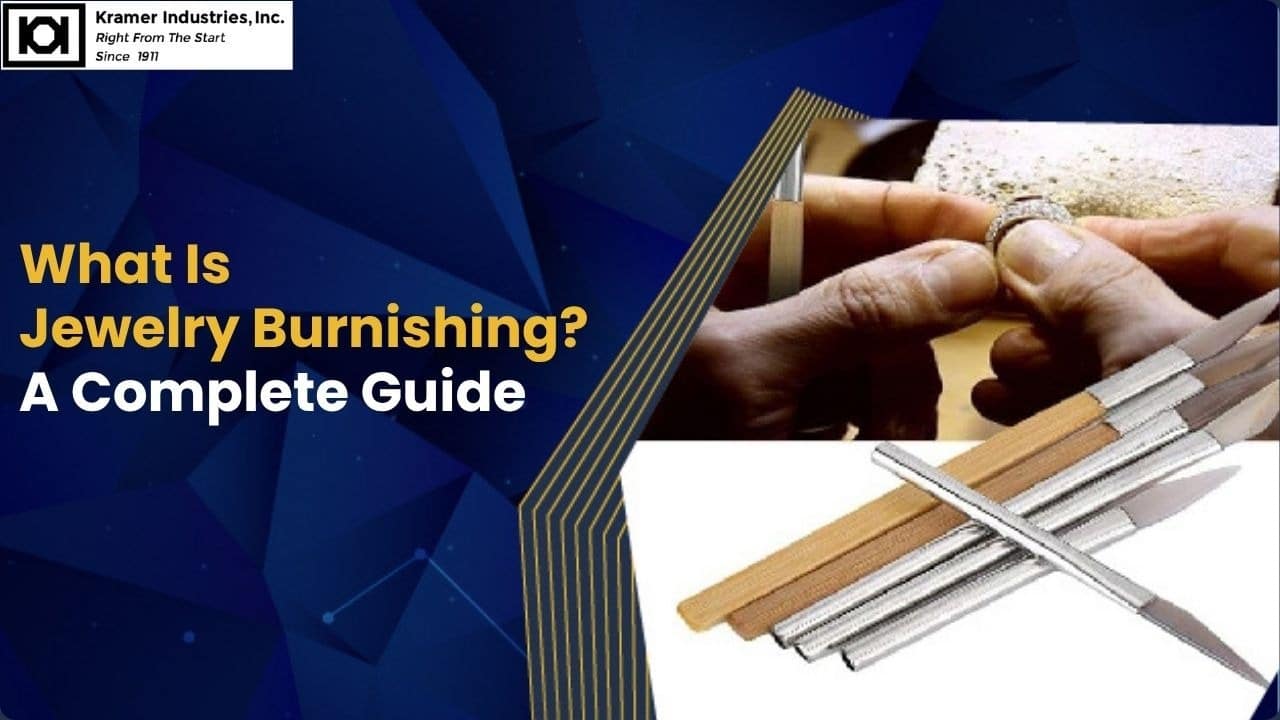
Hand burnishing is one of the oldest finishing techniques used in jewelry making. It involves manually rubbing a polished burnishing tool across the metal surface with controlled pressure.
This method is commonly used for:
- Tight or detailed areas
- Stone settings
- Edges and raised surfaces
- Repairing small scratches
Because the jeweler controls the pressure and direction, hand burnishing allows for high precision. It is particularly useful when finishing delicate pieces where aggressive polishing might damage intricate details.
Rotary Tool Burnishing
Some jewelers use rotary tools with burnishing attachments to speed up the finishing process. These tools rotate at controlled speeds and apply consistent pressure to the metal surface.
Rotary burnishing works well for:
- Small production batches
- Hard-to-reach areas
- Textured or uneven surfaces
The advantage of this method is increased efficiency, although it still requires careful control to avoid uneven pressure patterns.
Vibratory or Tumbling Burnishing
For larger production runs, jewelers often rely on vibratory finishing machines or tumblers filled with burnishing media such as stainless steel shot. Jewelry pieces are placed in the machine with water and a mild compound.
As the machine vibrates or rotates, the media repeatedly contacts the jewelry surfaces, compressing and smoothing the metal.
Benefits of this approach include:
- Consistent results across multiple pieces
- Reduced manual labor
- Improved surface hardness
- Enhanced shine without aggressive polishing
This type of jewelry burnishing is widely used in commercial jewelry manufacturing because it allows consistent finishing across many pieces at once. Equipment used in professional finishing environments, such as vibratory finishing systems developed by companies like Kramer Industries, helps streamline these processes while maintaining quality results.
When Jewelry Burnishing Is Most Effective
Jewelry burnishing works best after the piece has already undergone preliminary finishing steps. Proper surface preparation ensures the burnishing process enhances the final result rather than highlighting imperfections.
Before burnishing, jewelry pieces are typically:
- Filed and shaped
- Sanded to remove major scratches
- Pre-polished if a high-gloss finish is desired
If deep scratches remain, burnishing will not remove them. Instead, the process may compress surrounding metal and make the scratches more visible. Proper preparation is therefore critical.
Burnishing is also commonly used after patina treatments or texturing techniques. In these cases, the process brightens raised areas while leaving recessed areas darker, creating contrast and visual depth in the finished design.
Benefits of Jewelry Burnishing
Understanding and applying jewelry burnishing techniques provides several important advantages for jewelers and manufacturers.
Key benefits include:
- Produces a professional, high-quality finish
- Creates a smoother surface that reflects light more evenly
- Strengthens the metal surface through compression
- Preserves delicate design details and edges
- Improves efficiency in production environments
Because the process compresses rather than removes metal, jewelry burnishing enhances the surface without altering the original design or thickness of the piece.
Burnishing Compared to Traditional Polishing
Although both polishing and jewelry burnishing create shine, they serve different roles in the finishing process.
Polishing removes small amounts of metal using abrasive compounds. This step helps eliminate scratches and level the surface before final finishing.
Burnishing, on the other hand, compresses the metal surface rather than cutting it away. It improves smoothness and reflectivity while maintaining the original shape of the jewelry.
Most professional jewelry finishing processes combine both techniques. Polishing prepares the surface, while jewelry burnishing refines it to produce the final appearance.
Conclusion
Jewelry burnishing is an essential finishing technique that transforms a shaped piece of metal into a polished and professional-looking product. By compressing the metal surface rather than removing material, the process smooths microscopic imperfections, enhances shine, and strengthens the outer layer of the jewelry.
Whether performed by hand, with rotary tools, or through vibratory finishing systems, jewelry burnishing allows jewelers to achieve consistent and high-quality finishes while preserving delicate design details. Modern finishing equipment from experienced surface finishing specialists such as Kramer Industries also helps manufacturers scale these processes efficiently.
For jewelers and manufacturers looking to achieve smoother surfaces, improved durability, and consistent finishing results, understanding jewelry burnishing is an important step toward producing higher-quality jewelry pieces.
Related Articles