In many manufacturing environments, parts often require additional processing after machining. Edges may be sharp, surfaces may be rough, and finishes may vary from part to part. Abrasive finishing processes help refine these components by improving surface quality, removing burrs, and preparing parts for final use. Working with an experienced abrasive finishing company helps manufacturers select the right finishing method to improve consistency, reduce cycle times, and avoid unnecessary rework.
Abrasive finishing processes are commonly used across industries such as aerospace, automotive, medical, and general manufacturing. By selecting the appropriate equipment, media, and process parameters, companies can achieve repeatable finishes while improving throughput and operational efficiency. An abrasive finishing company like Kramer Industries provides guidance on selecting the proper finishing method based on part geometry, material type, and finish requirements.
What Is Mass Finishing
Mass finishing is a broad category of abrasive finishing processes that allows multiple parts to be finished simultaneously using abrasive media, compounds, and controlled motion. Instead of processing parts individually, mass finishing systems handle large batches in a repeatable and efficient manner.
Key benefits of mass finishing include:
- Processing multiple parts at once
• Improved consistency across batches
• Reduced labor requirements
• Better control over surface finish
• Increased production throughput
Within mass finishing, the two most common methods are vibratory finishing and barrel tumbling.
Vibratory Finishing
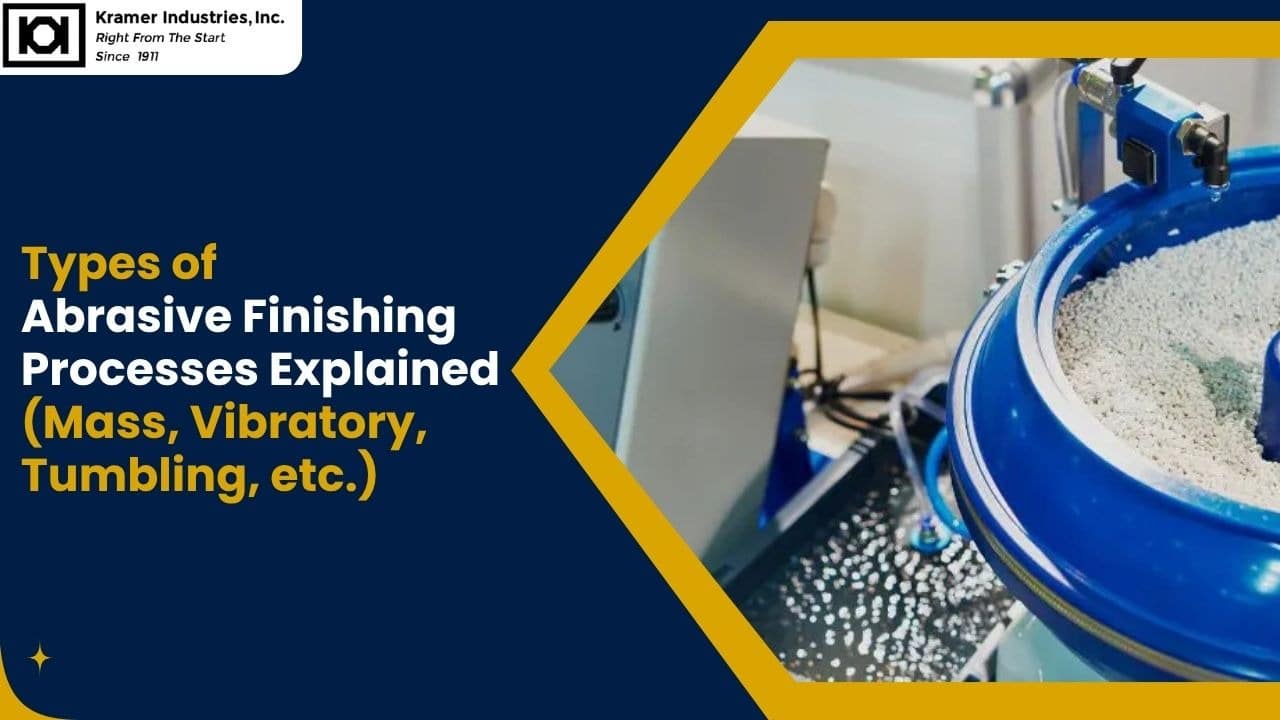
Vibratory finishing systems use controlled vibration to move parts and media together in a circular or spiral motion. This continuous movement creates uniform contact between parts and media, allowing for consistent surface finishing.
Vibratory finishing is commonly used for:
- Light to moderate deburring
• Surface smoothing
• Edge radiusing
• Pre-polishing and polishing
• Finishing complex or delicate components
Advantages of vibratory finishing include:
- Shorter cycle times compared to traditional tumbling
• Consistent surface finishes
• Reduced risk of part damage
• Suitable for intricate part geometries
• Better process control
Because of its versatility, vibratory finishing is widely used in precision manufacturing applications where consistency and surface integrity are important.
Barrel (Tumbling) Finishing
Barrel finishing, also known as tumbling, uses a rotating drum filled with parts, media, and compound. As the barrel rotates, the contents cascade over one another, creating the abrasive action needed to deburr and smooth surfaces.
Barrel tumbling is commonly used for:
- Heavy deburring
• Edge radiusing
• Surface smoothing of durable parts
• High-volume finishing applications
• Removing machining marks
Advantages of barrel tumbling include:
- Lower equipment cost
• Simple operation and maintenance
• Effective for durable parts
• Suitable for bulk processing
• Strong cutting and deburring action
While barrel finishing is effective, it typically offers less control than vibratory finishing and may not be ideal for delicate or precision components.
Types of Abrasive Finishing Media
Media selection plays a major role in determining the performance of any abrasive finishing process. Different media types control cutting speed, surface finish, and material removal.
Common media types include:
- Ceramic media – Dense and aggressive, ideal for heavy deburring and material removal
• Plastic media – Lighter and less aggressive, used for softer metals and preserving part geometry
• Steel media – Commonly used for burnishing and polishing with minimal material removal
Media shape also affects performance. Triangles, cylinders, cones, and specialized shapes help reach edges, holes, and recessed areas more effectively.
An experienced abrasive finishing company can help determine the correct media size, shape, and composition for specific applications.
Choosing the Right Abrasive Finishing Process
Selecting between vibratory finishing and barrel tumbling depends on part requirements, material type, and desired finish.
Vibratory finishing is typically preferred when:
- Parts require precision finishing
• Components have complex geometries
• Surface consistency is critical
• Parts are delicate or high value
Barrel tumbling is often preferred when:
- Aggressive deburring is required
• Parts are durable and simple in shape
• High-volume processing is needed
• Cost efficiency is a priority
Many manufacturers use both methods within the same operation to handle different finishing requirements.
Why Abrasive Finishing Matters
Working with the right abrasive finishing company helps manufacturers improve production efficiency and product quality. Properly configured finishing processes can lead to:
- Improved surface consistency
• Reduced rework and scrap
• Better coating adhesion
• Increased throughput
• Lower operating costs
Optimizing abrasive finishing processes helps transform finishing from a secondary step into an important part of overall production performance.
Conclusion
Abrasive finishing processes such as vibratory finishing and barrel tumbling provide effective solutions for deburring, smoothing, and polishing manufactured parts. Each method offers different advantages depending on part geometry, material type, and production requirements.
As an experienced abrasive finishing company, Kramer Industries helps manufacturers evaluate finishing methods, select appropriate media, and implement efficient processes. By aligning the right equipment, media, and application, companies can achieve consistent finishes while improving productivity and operational reliability.
Related Articles