In surface preparation, portability often determines whether a job runs efficiently or becomes a logistical challenge. When work shifts from a controlled shop environment to a shipyard, bridge, refinery, or remote jobsite, fixed blasting systems are no longer practical. A portable abrasive blasting machine fills that gap by delivering controlled, high-performance surface preparation directly at the point of work. This flexibility allows operators to clean, profile, and prepare surfaces wherever job conditions require, an approach frequently evaluated by Kramer Industries when supporting field-based blasting operations.
For contractors and maintenance teams, choosing the right portable system can significantly impact productivity, surface quality, and overall project cost.
What Is a Portable Abrasive Blasting Machine?
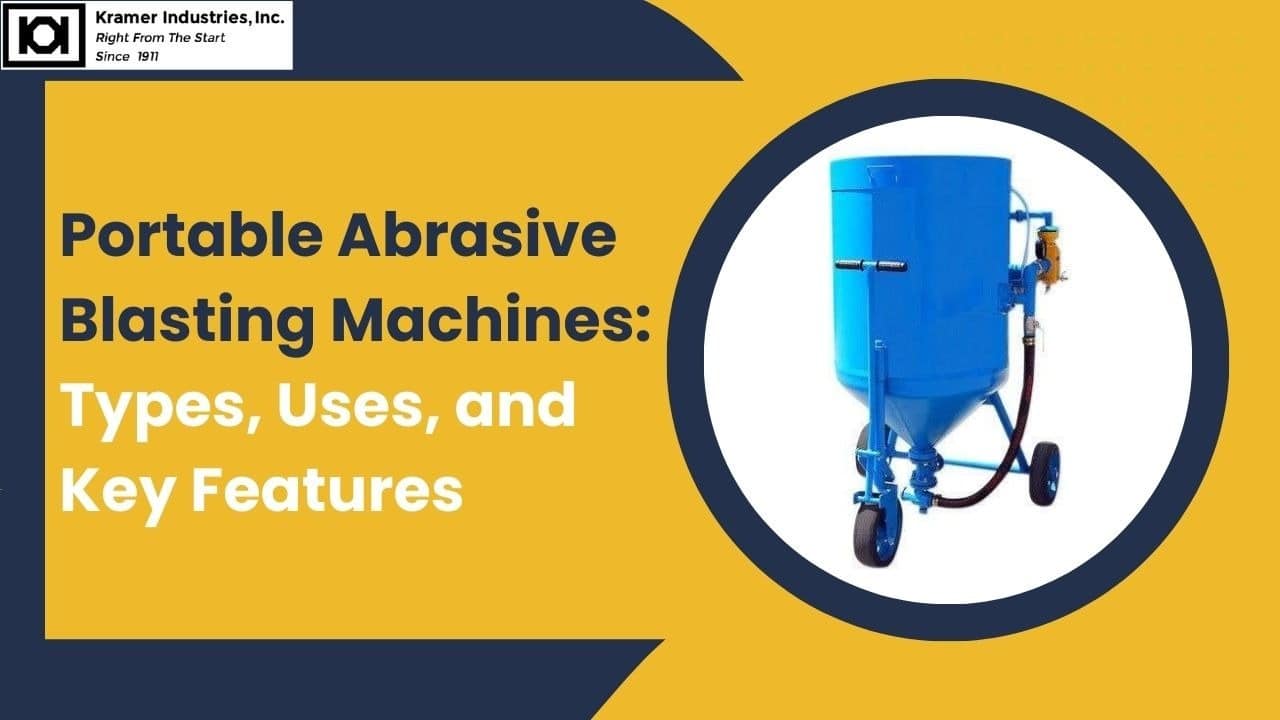
A portable abrasive blasting machine is a pressure vessel designed to store blasting media and deliver it, under controlled pressure, through a blasting nozzle. Unlike blast cabinets or automated blast rooms, these machines are mobile and typically paired with an external air compressor. They are commonly used in open environments where large structures, heavy equipment, or fixed installations cannot be moved.
The core advantage is mobility. Instead of transporting components to a blasting facility, operators bring the blasting process directly to the work surface, reducing downtime and improving responsiveness on active jobsites.
Types of Portable Abrasive Blasting Machines
Portable blasting equipment is available in several configurations, each suited to different production demands and surface preparation requirements.
Pressure Blast Machines
Pressure blast machines are the most widely used and productive option. Abrasive is stored in a pressurized vessel and metered directly into the air stream, delivering high velocity and consistent media flow. This makes them ideal for heavy-duty surface preparation, including thick coating removal and steel surface profiling to specification standards.
Suction or Siphon Systems
Suction systems use airflow to draw abrasive into the blast stream. While simpler in design, they deliver lower cutting energy and are generally limited to light-duty cleaning or touch-up applications. Their lower cost is offset by reduced productivity.
Wet Blasting Systems
Some portable units support wet blasting by introducing water into the abrasive stream. This configuration helps suppress dust and improve visibility in sensitive environments, though it adds complexity in media handling and cleanup.
Common Uses in the Field
A portable abrasive blasting machine is widely used across industries because it adapts to real-world jobsite conditions. In infrastructure and construction, these systems prepare steel beams, bridges, and storage tanks for coating. In marine environments, they remove corrosion and old paint from hulls and offshore structures. In industrial maintenance, they support shutdowns and turnarounds by quickly preparing surfaces for repair or recoating.
The key benefit is consistency. Properly selected equipment allows operators to meet surface preparation standards even in uncontrolled environments.
Key Features That Matter
Selecting the right portable abrasive blasting machine depends on understanding the features that directly affect performance and operating cost. Factors such as vessel size, abrasive metering accuracy, air consumption, and durability must align with jobsite demands. These performance variables are commonly assessed by Kramer Industries when helping operators match portable blasting equipment to specific surface preparation requirements.
Vessel Size and Capacity
Larger vessels reduce refill frequency and improve productivity on large projects, while smaller units offer better maneuverability in confined areas.
Abrasive Metering Control
Accurate metering improves cutting efficiency, reduces abrasive waste, and ensures uniform surface profiles.
Air Consumption Requirements
Matching the machine to available compressor capacity is essential. Insufficient air volume leads to pressure loss, uneven cleaning, and reduced productivity.
Durability and Maintenance Access
Field conditions are demanding. Robust pressure vessels, reliable valves, and easy access to wear components reduce downtime and extend equipment life.
Why the Right Choice Pays Off
A properly matched portable abrasive blasting machine improves job scheduling, lowers abrasive consumption, and helps crews meet specifications the first time. Over the life of the equipment, these advantages translate into lower operating costs and improved project margins. Poorly selected systems, by contrast, can slow production, increase consumable usage, and create inconsistent results that require rework.
Conclusion
Portable abrasive blasting machines play a critical role in modern field-based surface preparation. By understanding machine types, common applications, and key performance features, decision-makers can select equipment that aligns with real-world demands. Drawing on extensive surface preparation experience, Kramer Industries supports portable blasting solutions designed for consistent performance, reliability, and efficiency across demanding jobsite environments. The result is faster surface preparation, consistent quality, and more efficient blasting operations wherever the work takes place.
Related Articles