In metal fabrication and machining environments, burrs are a common byproduct of cutting, stamping, and machining operations. These sharp edges can interfere with assembly, reduce product quality, and create safety concerns. Automated deburring systems are designed to remove burrs consistently while improving production efficiency. By replacing manual finishing methods, automated deburring helps manufacturers achieve repeatable edge quality, reduce labor requirements, and support higher production volumes.
Automated deburring systems guide parts through controlled finishing stages using abrasive belts, brushes, grinding tools, or specialized media. Each stage is designed to remove burrs while maintaining part dimensions and surface integrity. Kramer Industries provides automated deburring solutions that help manufacturers improve consistency, reduce rework, and streamline finishing operations.
Step 1: Part Entry and Orientation
The automated deburring process begins with controlled part handling. Components are either loaded into fixtures or fed into the system using conveyors. Proper orientation ensures that edges and surfaces requiring deburring are exposed to the finishing tools.
Benefits of controlled part entry include:
- Consistent positioning of parts
• Repeatable edge exposure
• Reduced operator variability
• Improved process reliability
• Better batch-to-batch consistency
Standardized part handling helps ensure each component receives the same level of finishing.
Step 2: Tool Engagement and Burr Removal
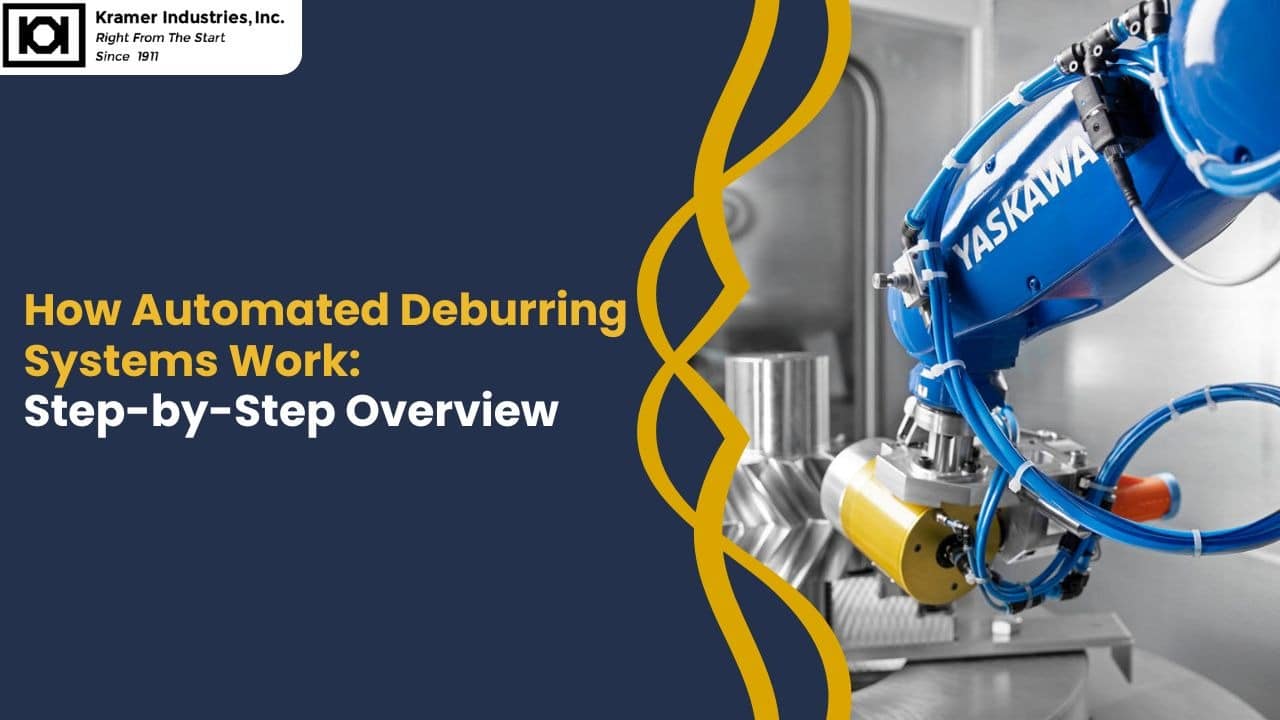
Once the part enters the working area, the automated deburring system engages the selected finishing tools. These may include abrasive belts, brushes, grinding wheels, or rotary tools depending on the application.
During this stage, the system removes burrs using controlled speed and pressure.
Advantages of automated tool engagement include:
- Controlled material removal
• Consistent deburring performance
• Reduced risk of part damage
• Maintained dimensional accuracy
• Repeatable finishing results
This controlled process reduces reliance on manual operator judgment.
Step 3: Edge Finishing and Surface Conditioning
Automated deburring often includes additional finishing steps such as edge radiusing or surface blending. These steps help improve part performance and prepare components for downstream processes.
Common results of this stage include:
- Smooth, uniform edges
• Reduced sharp corners
• Improved coating adhesion
• Enhanced part safety
• Consistent surface finish
Uniform finishing improves both functional and cosmetic quality.
Step 4: System Controls and Process Monitoring
Modern automated deburring systems use programmable controls to manage process variables. Operators can adjust speed, pressure, tool type, and cycle time based on part requirements.
Process control benefits include:
- Adjustable finishing parameters
• Consistent repeatable cycles
• Reduced setup time between parts
• Improved process flexibility
• Real-time monitoring capabilities
This level of control helps maintain consistent deburring performance across production runs.
Step 5: Part Exit and Inspection
After completing the deburring cycle, parts exit the system ready for the next manufacturing stage. Many operations include inspection to verify edge quality and surface finish.
Benefits of controlled part exit include:
- Consistent finished parts
• Reduced need for rework
• Smooth workflow integration
• Improved production efficiency
• Reliable downstream processing
Because automated deburring produces consistent results, inspection typically confirms quality rather than identifying defects.
Step 6: Media and Tool Maintenance
Abrasive belts, brushes, and other tooling gradually wear during use. Automated deburring systems are designed for easy monitoring and replacement of these components.
Maintenance advantages include:
- Predictable tool replacement schedules
• Reduced unexpected downtime
• Consistent finishing performance
• Improved equipment uptime
• Better cost control
Proper maintenance ensures automated deburring systems continue operating efficiently.
Why Automated Deburring Matters
Implementing it can significantly improve manufacturing operations. Key advantages include:
- Reduced labor requirements
• Consistent part quality
• Faster throughput
• Lower scrap and rework rates
• Improved operator safety
These benefits help manufacturers scale production while maintaining quality standards.
Conclusion
Automated deburring systems provide a controlled and repeatable method for removing burrs and improving part quality. By guiding components through structured finishing stages, these systems help manufacturers achieve consistent edge finishing while reducing manual labor.
With experience in surface finishing and abrasive solutions, Kramer Industries helps manufacturers implement deburring systems that improve production efficiency and consistency. Choosing the right automated deburring setup allows operations to reduce variability, improve throughput, and maintain reliable finishing results.
Related Articles