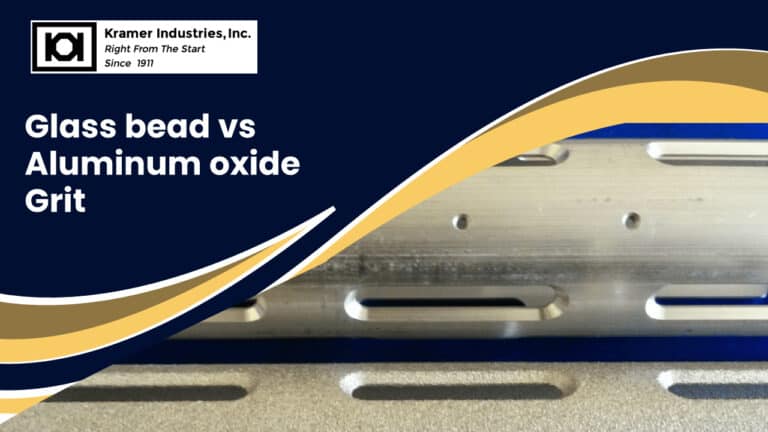
Glass bead blasting and shot blasting are abrasive blasting processes used for cleaning, finishing, and preparing surfaces. Glass beads typically produce a smooth, satin-like finish, while steel shot is commonly used for metal cleaning and controlled shot peening. Understanding their differences helps manufacturers select the right media for their materials, surface-finish requirements, and production goals.
What Does Glass Beads Blasting Mean?
Glass bead blasting uses small, spherical glass particles propelled by compressed air or suitable blasting equipment to clean and finish surfaces. It can remove light oxidation, discoloration, and selected contaminants while producing a uniform matte or satin finish.
The process is commonly used for compatible metal components when controlled cleaning is required without aggressive material removal. Results depend on media size, blasting pressure, exposure time, and substrate hardness.
Explore Glass Bead Blasting Products from Kramer Industries.
Glass Beads Blasting vs. Shot Blasting: Essential Differences
Glass bead blasting uses spherical glass particles to clean and finish surfaces, producing a smooth, matte, or satin appearance. It is commonly used for cosmetic finishing, contaminant removal, and cleaning compatible metal components.
Steel shot blasting uses spherical steel particles for industrial cleaning and controlled shot peening to improve metal fatigue performance. Both media types can be reused when suitable recovery systems are available.
The key difference is particle shape and application. Steel shot is spherical, while steel grit has angular particles that generally provide more aggressive cutting action. Shot blasting can refer to the process or equipment, not just the abrasive media.
Neither method guarantees damage-free results. Media size, pressure, exposure time, and substrate material influence the final finish.
Explore Steel Shot Blasting Media for industrial applications.
Different Sizes of Glass Beads
Glass beads are available in different particle sizes for various surface-finishing requirements. Illustrative ranges include:
- Fine: 20–40 µm — may suit delicate cleaning and finer finishes.
- Medium: 40–70 µm — suitable for various general-purpose finishing tasks.
- Coarse: 70–120 µm — may provide greater impact under comparable conditions.
These ranges are examples, not universal classifications. Available grades vary by supplier, so confirm product specifications and test the media on a representative component.
For more information, see Understanding Glass Bead Blasting Media Sizes.
Uses of Glass Beads
Glass beads are used for cleaning compatible metal parts, removing light oxidation, improving surface appearance, and performing selected deburring and finishing operations. They can also create decorative textures.
However, glass beads may be less effective than aggressive abrasives for removing heavy rust, thick coatings, or deep scale. Media selection should reflect the contamination level, substrate, desired finish, and next manufacturing step.
The Importance of Glass Beads in the Shot Blasting Procedure
Glass beads are useful when controlled cleaning and a relatively smooth surface are priorities. Their spherical shape produces a different surface effect from angular abrasives, which generally cut into the substrate more aggressively.
Operators should select suitable media, establish appropriate equipment settings, and test the process before full production. Glass beads are not a universal replacement for steel shot or steel grit.
Applications of Glass Beads Abrasives
Cleaning and Buffing
Glass beads can remove selected contaminants and light discoloration from compatible components while improving surface uniformity.
Surface Preparation for Coating
Blasting can clean surfaces before coating. However, glass beads may produce a smoother profile than angular abrasives. Verify that the resulting profile meets coating requirements.
Peening for Strength and Durability
Shot peening can improve fatigue performance by introducing controlled compressive residual stresses. This requires validated media, intensity, coverage, and process controls; ordinary glass bead cleaning should not automatically be considered a qualified peening process.
Rust and Oxidation Removal
Glass beads may remove light rust and oxidation. Heavy corrosion or scale may require a more aggressive abrasive.
Decal and Adhesive Removal
Glass bead blasting can help remove certain residues from compatible surfaces. Test delicate substrates and coatings to avoid unwanted damage.
Abrasive Blasting for Polishing and Smoothing
Glass beads can create a consistent matte or satin finish. Results depend on bead size, pressure, exposure time, and the original surface condition.
Sandblasting for Etching and Artistic Applications
Glass beads can create decorative textures on suitable materials. Masking, media selection, and pressure control help achieve the desired effect.
Reflective Road Markings
Purpose-made glass beads improve road-marking visibility by reflecting light toward its source. These products are designed for road applications and are not necessarily interchangeable with industrial blasting media.
Decorative Uses
Glass beads can produce decorative textures and visual effects in selected finishing applications. Choose products designed for the intended process.
Jewelry Making
Glass beads may be used in selected jewelry-finishing operations. Delicate metals, plating, and gemstones require careful compatibility testing.
Art and Mosaic Creations
Decorative glass beads are used in mosaics and artwork. These materials serve a different purpose from abrasive blasting media.
Dental Applications
Dental cleaning requires specialized products, equipment, and clinical protocols. Industrial glass bead blasting media should not be used for dental treatment.
Industrial Applications
Industries use glass bead blasting for cleaning, cosmetic finishing, and selected surface-treatment operations on compatible components. Suitability depends on material properties, production requirements, and quality specifications.
Cost of Glass Beads Blasting
Glass bead blasting costs depend on media grade, quantity, equipment, labor, and recovery systems. An indicative price range sometimes quoted is $0.50–$3 per pound, but actual prices vary by supplier, grade, and order volume. Verify current pricing before budgeting.
Operating costs also include compressed air, maintenance, dust collection, media replacement, and waste handling. Proper media recovery can reduce consumption when the system supports reuse.
Explore available options at BlastGrit Glass Beads.
Final Thoughts
Glass bead blasting is often suitable for controlled cleaning and smooth surface finishing, while steel shot blasting is commonly used for demanding metal-cleaning and validated peening applications. The right choice depends on the substrate, contamination, desired surface profile, and final use.
Compare Glass Bead Blasting Media and Steel Shot Blasting Media to identify suitable options for your process.
Frequently Asked Questions (FAQs)
1. What is the main difference between glass bead blasting and steel shot blasting?
Glass bead blasting typically produces a smooth, satin-like finish, while steel shot blasting is commonly used for metal cleaning and controlled shot peening.
2. Can glass bead blasting remove rust without damaging the base metal?
It can remove light rust and oxidation, but damage is possible if the media or operating settings are unsuitable. Test the process and inspect the surface before production.
3. Is glass bead media recyclable?
Yes. Glass beads can often be recovered and reused in suitable systems. Reuse depends on contamination, bead breakdown, and changes in particle size.
4. Which blast media should I choose for aluminum components?
Glass beads may suit aluminum cleaning and cosmetic finishing. They can help avoid iron contamination associated with some ferrous media, but suitability depends on the alloy and process. Test the media and verify the required finish.
Related Articles