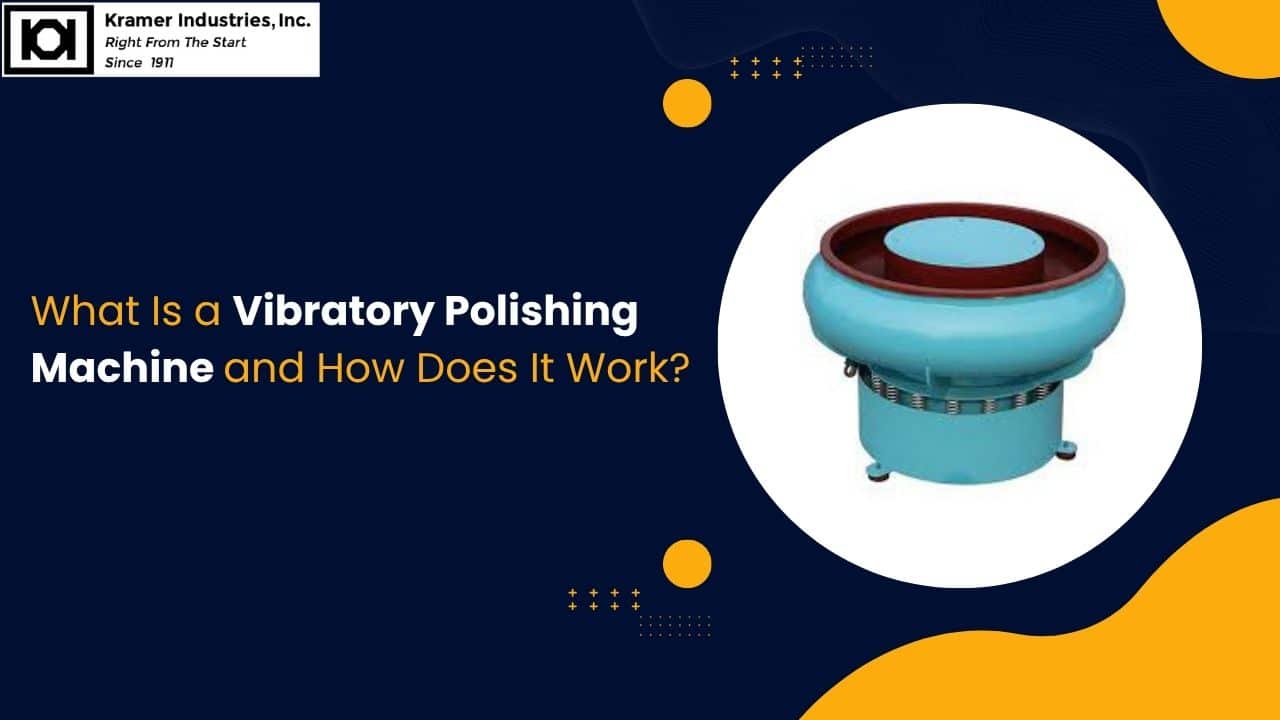
A vibratory polishing machine is a type of mass-finishing equipment used to deburr, polish, clean, descale, radius edges, burnish and prepare manufactured parts for further finishing. Controlled vibration moves workpieces and finishing media together, allowing multiple parts to be processed at the same time.
The machine, media, media-to-parts ratio, water and compounds all influence the final finishing result.
Understanding the Vibratory Polishing Machine
A vibratory polishing machine consists mainly of a bowl or tub, finishing media, a motor and eccentric or off-center weights. When the motor rotates, the weights generate a controlled vibratory force that moves the bowl and its contents in a continuous rolling and circulating pattern.
This movement repeatedly brings the media into contact with the workpieces. The resulting scrubbing and abrasive action can remove machining burrs, dirt, grease, rust, scale and other unwanted material while improving surface smoothness and producing controlled edge radiusing.
The Polishing Process
The bowl is supported so vibration can be transferred through the load. When the motor operates, the eccentric weights create the movement that causes parts and media to travel together in a consistent scrubbing pattern.
This repeated contact can remove machining burrs, grease, dirt, rust, scale and other surface contaminants. Depending on the media, compound and operating conditions, the process can also improve surface smoothness, polish parts, burnish surfaces and create controlled edge radiusing.
Vibratory motor operation may range from approximately 900 to 3600 cycles per minute, with amplitude adjustable up to approximately 5 mm, depending on the equipment. These figures should not be treated as universal settings because actual operating conditions depend on the machine, workpiece, media and required finish.
The Role of Media
Finishing media plays a central role in the finishing action inside a vibratory polishing machine. It provides abrasive action, cushions and separates parts, carries compounds and helps reach edges, holes and recessed surfaces.
Common media includes ceramic, plastic, steel and organic materials such as corn cob and walnut shell.
Media selection should consider:
- Part material and hardness
- Burr size and required material removal
- Part geometry
- Required surface finish
- Media size and shape
- Potential for media lodging
- Required cutting action
Ceramic media is commonly selected for aggressive cutting, deburring, edge radiusing and harder metals such as steel and titanium. Plastic media provides a gentler action for softer metals and delicate components. Steel media is primarily associated with burnishing and brightening, while organic media can be used for selected polishing, drying and finishing applications.
Larger media generally provides faster cutting, while smaller media can provide finer finishing and access to smaller features. However, media must be appropriately sized so it can reach required surfaces without becoming lodged in holes or recesses.
Typical Media-to-Parts Ratios
A media-to-parts ratio of approximately 3:1 by volume can be used as a starting point for many vibratory finishing applications, although the appropriate ratio varies with the machine, part geometry, media and application.
The ratios included in the original article provide useful general process guidance:
- 0:1 — No media; can provide aggressive deburring when part geometry permits.
- 1:1 — Rougher processing applications, including selected castings.
- 3:1 to 5:1 — Common range for general finishing and moderate part contact.
- 6:1 to 10:1 — Greater cushioning and reduced part-to-part contact for delicate components.
- 20:1 — High media coverage for very fine finishing and minimal direct part contact.
These ratios are not universal machine settings. Increasing the amount of media generally provides more cushioning and coverage. For critical or delicate components, specialized loading, separation or fixturing may also be used.
Compounds and Fluids
Water and finishing compounds help control the vibratory finishing process. Depending on the application, compounds can clean parts, remove oils and contaminants, lubricate the process, protect against corrosion, control foam and improve brightness or surface appearance.
The compound used can influence how the media performs during processing, and liquid compounds are commonly used in vibratory finishing applications. The amount of water and type of compound should be selected according to the media, workpiece and desired finishing result.
Applications and Materials for Vibratory Finishing
Vibratory polishing machines are used across a broad range of manufacturing applications, including:
- Deburring: Removing machining burrs and producing controlled edges.
- Polishing: Improving surface smoothness and appearance.
- Descaling and rust removal: Removing scale, oxidation and other unwanted surface material.
- Edge radiusing: Smoothing sharp edges and corners.
- Cleaning: Removing dirt, grease, oils and machining contaminants.
- Deflashing: Removing flash from selected molded components.
- Burnishing: Improving smoothness and brightness.
- Surface preparation: Refining parts before coating, plating or other finishing operations.
Materials and components that may be processed include steel, stainless steel, aluminum, brass, copper and titanium, as well as selected polymers, plastics and composites.
Applications can include delicate and precision parts, large components and recessed areas where controlled vibratory movement is advantageous.
The Role of Vibration
Vibration creates the controlled movement that allows media and workpieces to interact continuously. As the eccentric weights rotate, the bowl moves the load in a rolling pattern, creating repeated contact between the media and part surfaces.
That contact produces the scrubbing action required for deburring, polishing, cleaning, burnishing and edge radiusing. Vibration speed and amplitude affect the movement of the media and workpieces and can influence finishing intensity.
Vibration speed and amplitude affect the movement of the media and workpieces and can influence finishing intensity. The appropriate settings depend on the machine, media, workpiece geometry and desired result.
Tips for Getting the Best Results
For consistent vibratory finishing results, consider the following process factors:
- Choose the right media. Select media based on the workpiece material, geometry, burr size, required finish and desired cutting or polishing action.
- Match the bowl size to your work volume. The machine should provide enough capacity for the parts and media required for the application without overloading the bowl.
- Use the correct media-to-parts ratio. Adequate media provides coverage, cushioning and controlled contact between parts.
- Add the proper compounds. Use the appropriate water and finishing compound to support cleaning, lubrication, corrosion protection, brightness or other required finishing results.
- Keep the motor and springs in check. Inspect and maintain the machine’s motor, springs and other operating components so the vibratory system continues to provide consistent movement.
- Test and document the process. Establish the appropriate combination of media, ratio, compound and operating conditions through testing, then document the successful process for repeatable results.
Conclusion
A vibratory polishing machine provides a controlled mass-finishing method for deburring, polishing, cleaning, descaling, edge radiusing, deflashing, burnishing and surface preparation. Its performance depends on the interaction of machine movement, workpieces, finishing media, media-to-parts ratio, water and compounds.
The process can be applied to a wide range of materials, including metals, plastics, polymers and composites when appropriate finishing conditions are established.
Kramer Industries offers vibratory finishing equipment, media and compounds for industrial applications. Selecting the right combination and validating the process through controlled testing can help manufacturers establish consistent finishing results.
Frequently Asked Questions
1. What is a vibratory polishing machine?
A vibratory polishing machine is mass-finishing equipment that uses controlled vibration to move parts and finishing media together. The resulting contact can deburr, polish, clean, radius edges, burnish and refine manufactured components.
2. How does a vibratory finishing machine work?
An eccentric or off-center rotating weight generates vibration that moves the bowl and its contents in a controlled pattern. The resulting contact between the parts and media produces the scrubbing and abrasive action required for the selected finishing operation.
3. What media is used in vibratory finishing?
Common options include ceramic, plastic, steel and organic media such as corn cob and walnut shell. Media selection depends on the part material, geometry, burr size, desired finish and required cutting action.
4. What is the recommended media-to-parts ratio?
Kramer recommends a minimum ratio of approximately 3:1 media to parts by volume for most parts. The appropriate ratio can vary depending on part geometry, machine size, media selection and finishing requirements.
5. Are vibratory finishers suitable for delicate or precision parts?
Yes. With appropriate media, loading and operating conditions, vibratory finishing can be used for delicate and precision components. The controlled movement and cushioning provided by the media can help reduce severe part-to-part contact, while vibratory action can also reach recessed areas and holes.
Related Articles