Aluminum oxide is one of the most widely used abrasive blasting media because it cuts quickly, produces a controlled surface profile, and supports demanding cleaning and finishing applications. However, consistent results depend on more than selecting the right abrasive. Grit size, blasting pressure, nozzle technique, and abrasive condition all influence the finished surface.
Understanding these factors helps operators improve surface consistency, control material removal, and reduce rework.
What Factors Affect Aluminum Oxide Blast Media Cutting Performance?
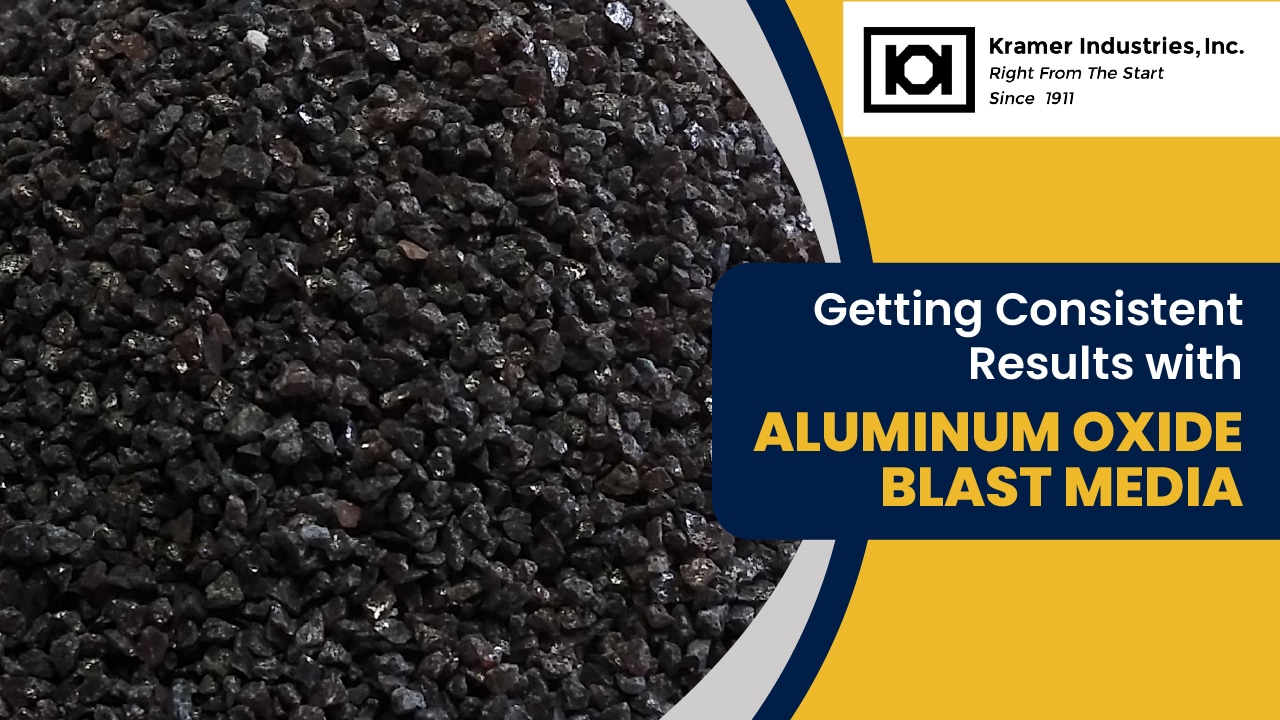
Aluminum oxide is a hard, angular abrasive. Its sharp particles remove material through a cutting action when they strike a surface. Several variables determine how effectively this process works.
Grit size: Coarser grades generally remove heavy coatings, corrosion, and scale more aggressively while producing a deeper surface profile. Finer grades are better suited to lighter cleaning and applications where excessive surface roughness is undesirable.
Air pressure: Higher pressure can increase particle velocity and cutting speed. However, excessive pressure may create an unnecessarily deep profile, increase abrasive consumption, and accelerate equipment wear.
Nozzle distance and angle: These influence how the abrasive stream interacts with the workpiece. Holding the nozzle closer concentrates the stream, while greater distance spreads the pattern and generally reduces the energy delivered to the surface.
Abrasive flow and dwell time: Consistent media delivery supports predictable cutting performance. Excessive exposure to one area can cause unwanted material removal, while insufficient exposure may leave surface defects behind.
The objective is to select the right combination of grit size, pressure, flow rate, and technique to achieve the required finish efficiently.
How to Prevent Uneven Surface Profiles
Uneven surface profiles can create problems when components require subsequent painting, coating, bonding, or appearance inspection. Inconsistent nozzle movement is a common cause: holding the nozzle in one area too long can produce a deeper profile, while moving too quickly can leave other areas under-blasted.
To improve consistency:
- Maintain a consistent nozzle distance and blast angle.
- Use uniform travel speed and overlap between passes.
- Monitor air pressure and abrasive flow.
- Inspect the surface regularly instead of judging performance by removal speed alone.
Abrasive condition also matters. During repeated use, aluminum oxide particles gradually fracture, producing smaller particles and fines. Changes in the working abrasive mix can affect cutting performance and the resulting surface profile.
Effective abrasive separation, removal of unwanted fines, and controlled additions of fresh media can help maintain predictable results. These practices are especially valuable when repeatability is essential for downstream finishing.
How Aluminum Oxide Blasting Abrasive Deburrs CNC-Machined Parts
CNC machining operations such as milling, drilling, turning, and cutting can leave small burrs and sharp edges, even on accurately manufactured components.
Aluminum oxide blasting abrasive can help remove exposed burrs and refine edges by directing abrasive particles against the workpiece from multiple directions. This makes blasting useful for complex geometries where manual deburring may be time-consuming or inconsistent.
However, aluminum oxide does not distinguish between an unwanted burr and the surrounding finished surface. Coarse grit, excessive pressure, or prolonged exposure can alter dimensions, round edges excessively, or create an unwanted surface texture.
Choosing the Right Blasting Parameters for Deburring
For precision CNC-machined components, the goal is controlled deburring rather than maximum material removal.
A finer aluminum oxide grit and moderate pressure may provide a suitable starting point when greater control is required. The final selection depends on:
- Material and alloy: Different substrates respond differently to abrasive impact.
- Burr size: Small, exposed burrs may require different settings from heavier burrs.
- Dimensional tolerances: Critical dimensions and edge conditions must remain within specification.
- Required finish: The process should remove imperfections without creating excessive roughness.
Testing representative parts and inspecting the results before production can help establish suitable parameters.
How to Get Better Results with Aluminum Oxide Blast Media
Consistent performance requires control over the entire blasting process. These practices can help improve repeatability:
- Choose the appropriate grit size based on the substrate, contaminant, and desired surface profile.
- Maintain suitable air pressure rather than automatically using the highest available setting.
- Keep nozzle movement consistent to achieve uniform coverage.
- Monitor abrasive condition for contamination, fines, and changes in the working mix.
- Inspect finished components for cleaning effectiveness, surface profile, and dimensional accuracy.
- Document successful settings so validated processes can be reproduced across production runs.
Kramer Industries can be considered when evaluating abrasive requirements for cleaning, surface preparation, and finishing applications. Matching the abrasive to the workpiece and process requirements is essential for achieving reliable results.
Conclusion
Aluminum oxide blast media delivers effective cutting performance because of its hardness and angular particle shape. However, consistent results depend on controlling grit size, pressure, abrasive flow, nozzle distance, blast angle, travel speed, and abrasive condition.
When these variables are managed properly, aluminum oxide blasting media can support efficient contaminant removal, uniform surface profiles, and controlled deburring of CNC-machined parts. Better process control can reduce rework, improve downstream finishing, and make more effective use of abrasive media and production time.
Frequently Asked Questions
1. What is aluminum oxide blast media used for?
Aluminum oxide blast media is used for cleaning, surface preparation, coating removal, and finishing. Its hard, angular particles can remove corrosion, scale, and surface imperfections while creating a controlled surface profile.
2. How do I choose the right aluminum oxide grit size?
Choose grit size according to the substrate, material being removed, and required finish. Coarser grades generally provide more aggressive cutting, while finer grades suit lighter cleaning and applications requiring greater surface control.
3. Does air pressure affect aluminum oxide sandblasting media performance?
Yes. Air pressure affects particle velocity and impact energy, influencing cutting speed and surface profile. Excessive pressure can create unwanted roughness and increase abrasive and equipment wear.
4. Can aluminum oxide blasting abrasive deburr CNC-machined parts?
Yes. It can remove exposed burrs and refine edges on CNC-machined components. Grit size, pressure, and exposure time must be controlled to avoid changing critical dimensions or the required surface finish.
5. How can I achieve consistent results with aluminum oxide blasting?
Maintain consistent grit size, air pressure, abrasive flow, nozzle distance, blast angle, and travel speed. Monitor abrasive condition and inspect finished surfaces regularly to reduce process variation.
Related Articles