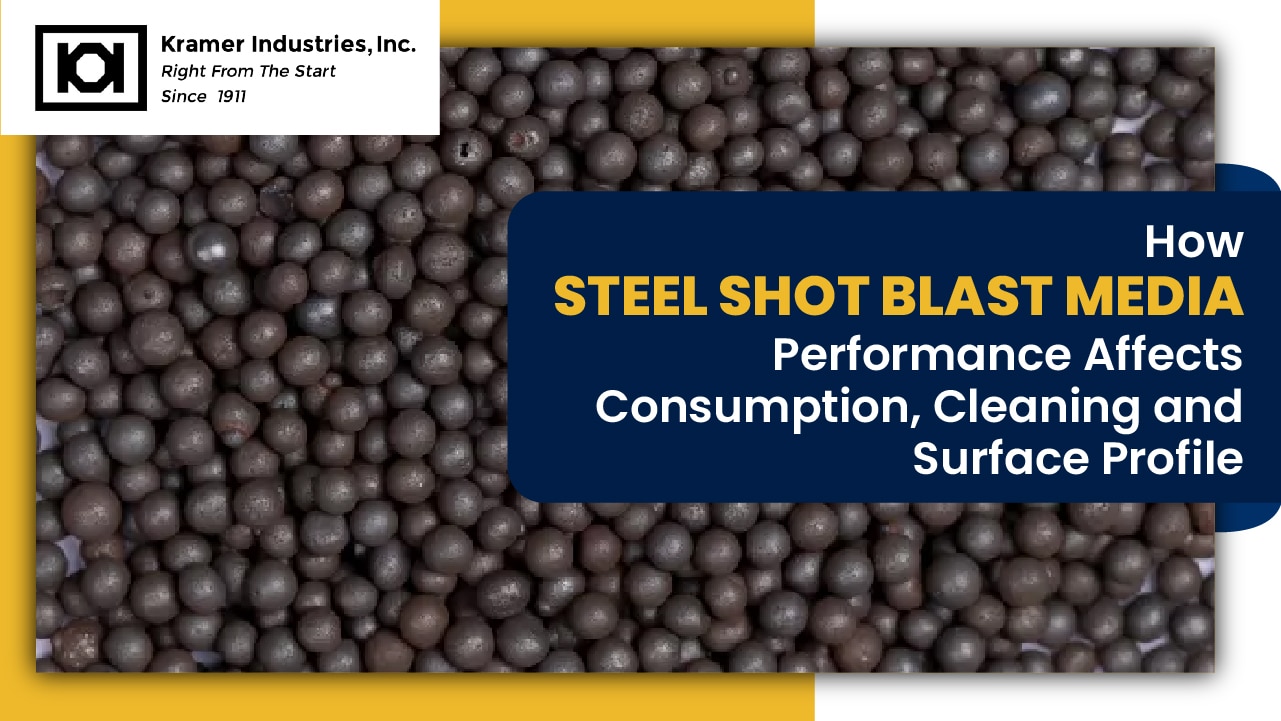
Steel shot is widely used in abrasive blasting because it delivers consistent cleaning and can withstand hundreds or thousands of impacts before wearing out. However, efficient operation depends on abrasive condition, equipment settings, shot size, and surface requirements.
When abrasive consumption increases, contamination remains on parts, or the required surface profile becomes difficult to maintain, the cause may lie in the operating process rather than the abrasive itself. Understanding these factors helps reduce waste, improve cleaning consistency, and control finishing costs.
How to Reduce Steel Shot Blast Media Consumption
Steel shot gradually wears down as it repeatedly strikes the workpiece. Some consumption is unavoidable, but excessive loss can indicate problems with equipment or process control. Optimising Steel Shot Blast Media performance starts with identifying where usable abrasive is being lost.
Maintain the Abrasive Recovery System
Abrasive recovery and separation systems remove dust, fines, scale, and broken particles while returning usable steel shot to the machine. If separators or air-wash systems are incorrectly adjusted, reusable shot may be discarded along with waste.
Regular inspections of separator settings and recovery components can reduce unnecessary losses. A properly maintained system also helps maintain a consistent working mix and improves the efficiency of Steel Shot Blasting Media.
Control Blast Velocity and Operating Mix
Higher blast velocity increases impact energy, but excessive intensity can accelerate abrasive breakdown without significantly improving cleaning performance.
The operating mix changes as larger shot particles gradually wear down. Replacing the working charge exclusively with new, full-size shot can affect coverage and cleaning characteristics. Maintaining an appropriate mix helps deliver predictable results and improves the productive life of the abrasive.
Leaks, worn cabinet seals, damaged recovery components, and abrasive carried out on workpieces can also increase consumption. The objective is to obtain the maximum productive work from every pound of abrasive rather than simply reducing media usage.
Why Isn’t Steel Shot Removing Contamination Effectively?
When steel shot stops cleaning effectively, adding more abrasive may not solve the underlying problem.
Steel shot is spherical and primarily produces a peening or hammering action. It can remove scale, rust, and other contamination when the application and operating parameters are appropriate. However, it does not provide the same aggressive cutting action as angular abrasives such as steel grit.
This distinction matters when removing tightly bonded coatings or preparing surfaces that require substantial etching. Selecting the right Steel Shot Blast Media requires matching the abrasive’s characteristics to the cleaning objective.
Select the Appropriate Shot Size
Shot size affects both impact energy and surface coverage.
- Larger steel shot: Delivers greater impact energy per particle but produces fewer impacts per pound.
- Smaller steel shot: Provides more particles and denser coverage, although each particle carries less impact energy.
Choosing the appropriate size means balancing impact force, coverage, and the required cleaning result.
Contamination within the operating mix can also reduce efficiency. Excessive fines, dust, broken particles, and workpiece debris may interfere with performance. Worn blasting components, insufficient abrasive flow, or an incorrectly positioned blast pattern can leave some areas inadequately cleaned.
Before changing abrasive types, inspect the working mix, blast velocity, equipment condition, separator performance, and exposure time. Kramer Industries recommends evaluating these factors together when assessing abrasive requirements.
How Steel Shot Affects Structural Steel Surface Profile
Surface profile is particularly important when structural steel will be painted or coated. The surface needs sufficient texture for coating adhesion, while excessive or inconsistent roughness can create finishing problems.
Steel shot generally produces a more rounded profile than angular steel grit. Each spherical particle creates a small indentation, and repeated impacts form an overlapping pattern across the workpiece.
Several factors influence the resulting surface:
- Shot size: Larger particles generally create more pronounced indentations, while smaller particles provide denser coverage.
- Hardness: Influences how the abrasive and substrate respond to impact.
- Velocity: Affects impact energy and surface deformation.
- Impact angle and exposure time: Influence coverage and the final surface condition.
The required profile should guide abrasive selection. Steel shot may be suitable when rounded-particle impact and consistent cleaning are priorities, but angular steel grit may be more appropriate when a sharper anchor profile is required. A controlled shot-and-grit blend may also be considered, depending on the application and equipment.
When comparing steel blasting media, consider the surface profile required by the coating specification rather than choosing solely on cleaning speed. Kramer Industries can help evaluate abrasive requirements based on the intended application and finishing objectives.
How to Improve Steel Shot Blasting Performance
Consistent results depend on controlling the abrasive, equipment, and operating conditions together.
- Monitor abrasive consumption: Track additions and investigate unexpected increases.
- Inspect recovery systems: Ensure usable shot is returned to the operating mix.
- Maintain consistent settings: Control blast velocity, abrasive flow, and exposure time.
- Check abrasive condition: Remove excessive fines and contamination.
- Verify the blast pattern: Ensure all required areas receive adequate coverage.
- Measure the surface profile: Confirm that the finished surface meets applicable coating requirements.
Selecting suitable Steel Shot Blasting Media also requires understanding the substrate, contamination, and desired finish. When evaluating steel blasting media, consider abrasive durability, cleaning effectiveness, and the surface profile needed for the next production stage.
A properly maintained steel shot blaster, combined with a suitable operating mix, supports repeatable performance and efficient abrasive use. Operators should also inspect the steel shot blaster regularly for worn components, inconsistent abrasive delivery, and recovery issues that could affect cleaning quality.
Conclusion
Efficient steel shot blasting comes down to controlling the process rather than simply increasing abrasive flow. Excessive consumption may indicate poor separation, leaks, excessive velocity, or an unsuitable operating mix. Poor cleaning may result from incorrect shot size, contamination, insufficient coverage, or a mismatch between rounded shot and the material being removed.
For structural steel, the resulting surface profile must also meet coating requirements. By controlling shot size, operating mix, blast intensity, and equipment settings, operators can reduce avoidable waste, achieve more consistent cleaning, and prepare surfaces more reliably. Kramer Industries emphasises the importance of matching abrasive selection and process settings to the required results.
Frequently Asked Questions
1. What is Steel Shot Blast Media used for?
Steel Shot Blast Media is used for cleaning metal surfaces, removing rust and scale, and preparing components for finishing. Its spherical particles produce a peening action that supports consistent results in suitable applications.
2. How can I reduce steel shot consumption?
Inspect recovery systems, check for leaks and abrasive carryout, maintain suitable blast velocity, and monitor the operating mix. These measures can help reduce unnecessary media loss.
3. Why is my steel shot blaster not cleaning effectively?
Possible causes include incorrect shot size, contaminated abrasive, insufficient flow, worn components, an uneven blast pattern, or unsuitable exposure time. Inspect these factors before increasing abrasive consumption.
4. Does steel shot produce a suitable surface profile for painting?
Steel shot produces a generally rounded profile. Suitability depends on the coating specification and required surface texture. Angular steel grit may be preferable when a sharper anchor profile is needed.
5. What is the difference between steel shot and steel grit?
Steel shot has spherical particles that primarily produce a peening action, while steel grit has angular particles that provide more aggressive cutting. The choice depends on the cleaning objective and required surface profile.
Related Articles