Sandblasting, an art of abrasive precision, also known as abrasive blasting, stands as a time-honored process in the sector of surface treatment. One can imagine it as a cascade of fine grit or media particles propelled at a controlled velocity to coax out stubborn rust or grime from a surface. Yes, sandblasting can indeed be a gritty and even loud process. And yet, with over a century of this process being used in industries, it has become indispensable. Its versatility has led to its use in industrial maintenance and architectural and even fine art restoration. Let us go into the specifics of sandblasting—the method, the machinery, and the boundless applications.
The Sandblasting Process: Fundamentals
At its essence, sandblasting is simple, though not as simplistic as it seems. Air or water combines with abrasive particles to alter a surface in some beneficial way. This could be cleaning, etching, or prepping it to better adhere to coatings. While traditionalists once favored sand alone, the field has grown today. Today, the industry embraces a medley of media from walnut shells to glass beads, each bringing its own distinct characteristic to the process.
Applications That Span Industries
What can sandblasting accomplish? The answer, quite simply, is “a great deal.” The process is as versatile as it is powerful, suiting applications large and small, delicate and robust. To illustrate:
Exorcising Rust and Corrosion: Like a fine eraser, sandblasting removes oxidized layers from surfaces, leaving behind the clear metal underneath.
Restoring Antiquities: For delicate heirlooms or fragile sculptures, sandblasting can be calibrated to preserve intricate detail while removing grime and debris.
Surface Preparation for Coatings: By roughening surfaces ever so slightly, sandblasting ensures paints and finishes adhere more securely—a quiet but crucial step in lasting quality.
Fire and Mold Remediation: Beyond industrial use, sandblasting can also rejuvenate surfaces affected by fire or mold, stripping away unsalvageable layers effectively.
Large-Scale Structure Maintenance: From bridges to ships, sandblasting helps maintain these massive entities, warding off decay and deterioration over time.
Each of these tasks underscores sandblasting’s dexterity and efficacy, establishing it as a favored technique across sectors, from automotive to architecture.
The Anatomy of Abrasive Sandblasting Equipment
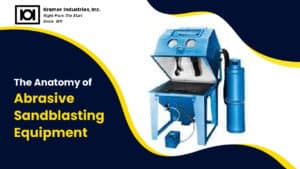
A well-functioning abrasive sandblasting equipment isn’t simply one device but a symphony of components, each indispensable to the overall performance. Let us walk through each critical element, each playing its own part:
The Air Compressor: At the heart of abrasive sandblasting equipment, a compressor breathes life into the system. It delivers power enough to launch the abrasive media at just the right speed. Choose wisely—a robust compressor suited to the abrasive type and nozzle will bring the desired results.
Blast Pot: Also called the pressure vessel, this container introduces abrasives into the air or water stream with precision, balancing flow and pressure in harmonious tandem.
Blasting Nozzle: The nozzle, a powerful component of the abrasive sandblasting equipment, dictates the angle and shape of the blast pattern. Narrow tips grant precise control, while broader apertures cover more ground, making nozzle selection paramount.
After-Cooler and Moisture Separator: In dry blasting setups, these accessories keep the system dry and efficient. Cooling compressed air, they expel moisture before it enters the blast pot, preventing troublesome clogs.
Deadman Switch: This is a safety feature in abrasive sandblasting equipment. It grants control to the operator, allowing them to cease blasting instantly if needed. With the simple press or release of a button, the flow of air and media halts, preserving both safety and accuracy.
Air and Blast Hoses: The hoses, essential but unassuming, direct the flow of air and abrasive throughout the system, ensuring smooth operation without leaks.
Personal Protective Equipment (PPE): Sandblasting is no mild affair; it unleashes clouds of particulate matter. Thus, PPE—gloves, protective wear, and a blast hood or respirator—safeguards the operator, protecting against dust and debris.
Varieties of Sandblasting Systems
As sandblasting has grown, so too has the diversity of its tools. Systems broadly split into two categories:
Dry Blasting Systems: A traditional choice, dry systems use only air to propel abrasive particles, producing ample dust but powerful results.
Wet Blasting Systems: Adding water to the mix, wet systems create less dust, making them ideal for more delicate surfaces where integrity is paramount.
Among the variety of abrasive machines you may come across are:
- Sandblasters
- Abrasive Blasting Units
- Enclosed Blast Rooms
- Precision Blast Cabinets
- Abrasive Blast Chambers
- High-Pressure Water Blasters
- Vapor-Based Blasters
- Wet Abrasive Systems
- Dust-Free Blasting Devices
- Compact Blast Cabinets
- Soda Blasting Tools
- Dry Ice Blasters
- Peening Equipment
Each of these tools offers unique capabilities, tailored to meet different surface preparation and cleaning needs.
For the intrepid operator in need of adaptability, some modern systems can toggle between dry and wet modes, providing greater flexibility for diverse tasks. Portable all-in-one setups—trailers outfitted with a compressor, water tank, blast pot, and air drying systems—offer exceptional convenience for projects in varying locales.
Choosing the Right Abrasive Sandblasting Equipment
The selection of abrasive sandblasting equipment is an art in itself. Consider the scope, portability, and power requirements of your project. A mobile unit may be ideal if your worksite varies. Meanwhile, versatility reigns with systems capable of both wet and dry blasting, adaptable to each job’s unique demands.
Conclusion
Abrasive sandblasting equipment stands as both robust and refined, an answer to the demands of the modern industrial world. From the gentle cleansing of antiques to the forceful erosion of rust, these systems offer operators the power of adaptability, precision, and safety. The savvy operator, by understanding each piece of equipment’s role, can master the nuances of sandblasting to achieve superior results, all while ensuring efficiency and safeguarding both man and machine.
Benefit from the power of precision with Kramer Industries’ premium abrasive sandblasting equipment—crafted for versatility and enduring strength. Whether refining delicate antiques or tackling tough industrial cleanups, we have the tools to elevate your process. Connect with Kramer Industries today to transform your surface preparation needs.
Related Articles