Stainless steel is valued for its strength, corrosion resistance, and clean appearance, but those benefits depend heavily on proper surface finishing. Whether the objective is coating preparation, weld blending, or achieving a uniform satin or matte finish, abrasive selection directly impacts the final outcome. White aluminum oxide blast media is widely used in stainless steel applications because it delivers strong cutting performance while maintaining cleanliness and control. In stainless steel finishing environments, Kramer Industries works with applications where surface consistency and contamination control are critical.
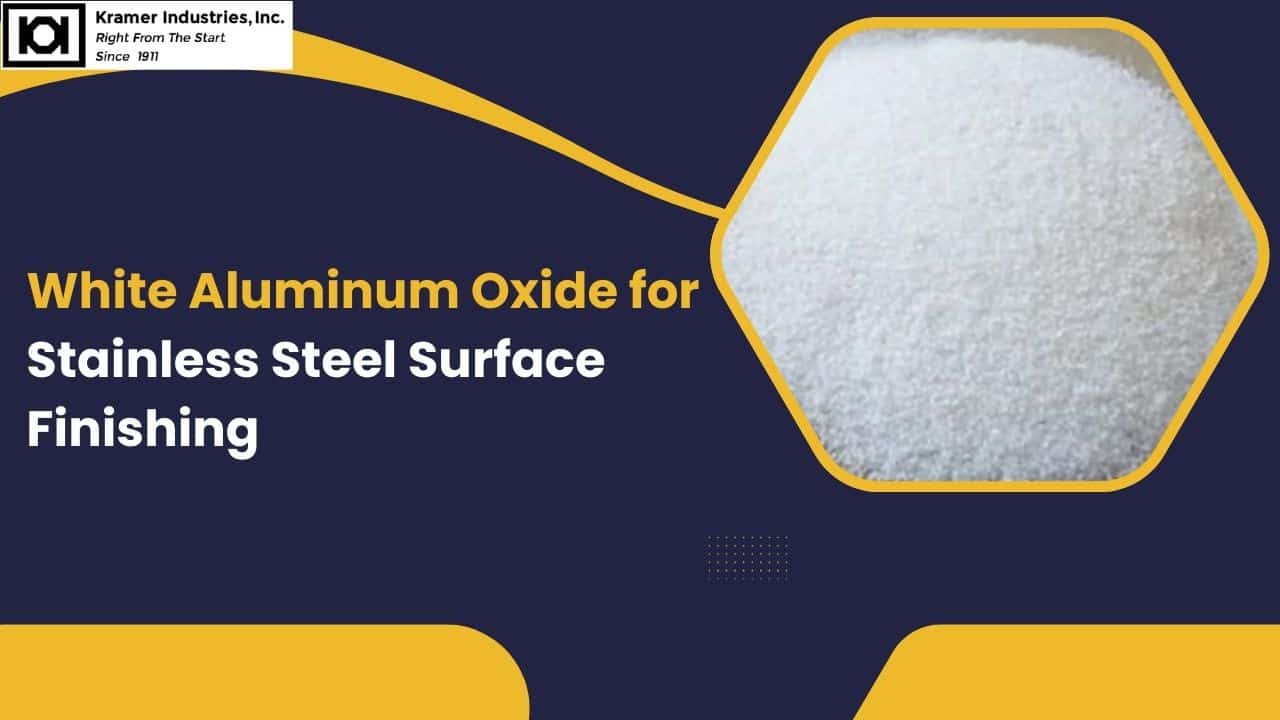
White aluminum oxide is a high-purity, friable abrasive engineered for consistency. Compared to standard brown aluminum oxide, it contains fewer impurities and fractures more readily during use. That controlled breakdown continuously exposes sharp cutting edges, allowing stainless steel processors to maintain steady performance throughout blasting or finishing operations. For operators, this means faster results and more uniform surface quality.
Why Stainless Steel Requires Specialized Abrasives
Stainless steel behaves differently than carbon steel during surface finishing. It work-hardens easily, reveals surface imperfections quickly, and is often specified for applications where appearance is just as important as performance. Abrasives that are too aggressive can smear the surface or embed contaminants, while overly mild media can extend cycle times and produce inconsistent finishes.
White aluminum oxide blast media offers an effective balance. It is hard enough to remove mill scale, heat discoloration, and light weld spatter, yet clean enough to avoid introducing unwanted residues. Its high purity is especially important for stainless steel, where iron contamination can lead to staining or corrosion. These contamination-related considerations are frequently evaluated by Kramer Industries when supporting stainless steel finishing operations.
Controlled Cutting and Surface Consistency
A key advantage of white aluminum oxide is its self-sharpening behavior. As the grains fracture, new sharp edges are exposed rather than rounding over. This keeps cutting action consistent and reduces the pressure required to achieve the desired finish. On stainless steel, lower pressure helps limit heat buildup and minimizes the risk of surface distortion.
In practical terms, operators achieve more uniform results across batches. Surface profiles remain repeatable, edge definition is cleaner, and it becomes easier to maintain specific roughness ranges for coatings, bonding, or cosmetic finishes. This level of control is critical in industries such as food processing, medical equipment, and architectural metalwork, where stainless steel surfaces must meet strict functional and visual standards. These performance expectations are often addressed by Kramer Industries when aligning abrasive selection with end-use requirements.
Versatility Across Stainless Steel Finishing Processes
White aluminum oxide blast media performs well across multiple finishing methods. In abrasive blasting, it is commonly used to clean and texture stainless steel before painting, powder coating, or passivation. Its sharp cutting action removes oxidation and scale efficiently without excessive dwell time.
In bonded and coated abrasives such as grinding wheels, discs, and sanding belts, white aluminum oxide supports precise material removal during weld blending and surface leveling. Its friability helps reduce loading and glazing, which extends tool life and improves productivity. For shops handling varied stainless steel work, this versatility simplifies abrasive selection and process planning.
Cleanliness and Process Reliability
Surface cleanliness is critical when working with stainless steel. Embedded contaminants can compromise corrosion resistance and appearance, particularly in environments exposed to moisture, chemicals, or sanitary conditions. White aluminum oxide blast media is chemically inert and free of iron content, reducing the risk of surface contamination.
This cleanliness supports greater process reliability. Fewer defects mean less rework, reduced troubleshooting, and higher confidence that finished components will perform as intended in service.
Selecting the Proper Grit Size
White aluminum oxide is available in a wide range of grit sizes to support different finishing goals. Coarser grits are used for heavy cleaning and profile generation, while finer grits are ideal for smoothing and cosmetic finishing. Proper grit selection depends on surface requirements, blasting pressure or tool speed, and the final application of the part.
When matched correctly to the job, white aluminum oxide blast media delivers efficient material removal without unnecessary equipment wear or excessive abrasive consumption.
Conclusion
White aluminum oxide blast media has become a preferred abrasive for stainless steel surface finishing because it combines purity, hardness, and predictable cutting behavior. Its self-sharpening performance, resistance to contamination, and adaptability across finishing processes make it a reliable choice for operations that demand consistent, high-quality results.
For professionals working with stainless steel, Kramer Industries applies practical surface finishing experience to help ensure abrasive selection supports control, reliability, and confidence in the finished surface.
Related Articles